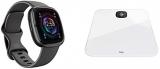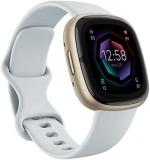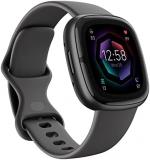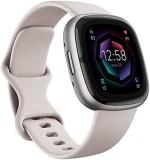
The Fitbit Sense 2 and the Garmin Vivoactive 6 both sit at the top of their respective health and fitness lines, yet they answer two very different questions. One is built around a continuous electrodermal activity sensor that reads the skin for signs of stress; the other is built around multi-band GNSS and a library of more than 80 sport apps. This comparison is written as a buying guide worth keeping, because the right choice depends less on the spec sheet than on the behaviour each watch is engineered to encourage.
| Feature and Selling Point | Fitbit Sense 2 | Garmin Vivoactive 6 |
|---|---|---|
| Case Size and Build | Approx. 40.5 mm aluminum case | 42 mm polymer case |
| Display Type | AMOLED touchscreen | 1.2-inch AMOLED touchscreen |
| Battery Life (Smartwatch Mode) | Up to 6 days | Up to 11 days (5 days with always-on display) |
| GPS Battery Life | Up to 12 hours continuous GPS | Up to 21 hours GNSS |
| Satellite Positioning | Single-band GPS | Multi-band GNSS |
| Stress and EDA Sensor | Continuous EDA (cEDA) | HRV-based stress tracking |
| Sleep Tracking | Sleep stages, score, smart wake | Advanced sleep coaching, Sleep Score |
| Sport Profiles | Over 40 exercise modes | More than 80 preloaded sport apps |
| ECG App | ECG app for atrial fibrillation | Not available |
| Contactless Payments | Fitbit Pay (limited bank support) | Garmin Pay (broader network) |
| Water Resistance | 5 ATM (swim-proof) | 5 ATM (swim-proof) |
| On-Device Music | No on-device music storage | On-device music storage |
| Subscription Model | Fitbit Premium for deep insights | Garmin Connect free, no premium tier |
| Best Suited For | Stress monitoring and daily wellness | Multisport training and outdoor navigation |

The table shows that the most consequential split is philosophical rather than mechanical. The Sense 2 leans on a continuous electrodermal activity sensor and an ECG app to frame health as something to be managed minute by minute, while the Vivoactive 6 invests in 21 hours of GNSS battery life and a library of more than 80 sport apps. The battery gap, six days against eleven, is the first column most readers will scan, because it decides how often each watch sits on a charger rather than on a wrist.
Design Philosophy and Physical Presence
The Sense 2 arrives with an aluminum case measuring roughly 40.5 mm across, a size that sits comfortably on slimmer wrists and disappears under a shirt cuff. Fitbit has dressed this model in an understated silhouette that avoids the chunky bezels common in sport watches, because the intended audience treats the device as a wellness companion first and an athletic instrument second. The AMOLED display is bright enough for outdoor viewing, and the soft-touch materials on the back case are chosen to sit gently against the skin during the long wear sessions that continuous stress tracking requires.
The Vivoactive 6 takes a different track. Its 42 mm polymer case keeps the weight low, which matters for runners and swimmers who notice every gram during a session. Garmin has fitted a 1.2-inch AMOLED display with a layout that prioritizes glanceable data fields, and the physical profile is slim enough to wear overnight for sleep coaching without creating a ridge against the pillow. The design language is less fashion-forward than the Fitbit and more functional, with a bezel and button arrangement meant to be operated with wet or gloved hands. Neither watch is fragile, but the materials tell you who each company expects to see in the mirror.
The Fitbit Context and the Wellness-First Approach
To understand the Sense 2, it helps to place it within the wider Fitbit brand’s ecosystem, which has spent nearly two decades building a software identity around daily readiness and stress management rather than race-day performance. The sensor suite on the Sense 2 is the headline: a continuous EDA sensor that watches for changes in sweat gland activity, an ECG app that records heart rhythm for signs of atrial fibrillation, and a skin temperature sensor that logs overnight variations. The device also delivers a daily Stress Management Score and guided breathing sessions, all of which push the user toward reflection rather than exertion.
The health features only reach their full depth with a Fitbit Premium subscription, a detail that belongs in any honest buying guide. Without the paid tier, the Sense 2 still tracks steps, sleep stages, heart rate, and stress, but advanced analytics, daily readiness breakdowns, and long-term trend reports sit behind the paywall. The battery rating of up to six days also assumes moderate use; heavy GPS sessions drain it much faster. For someone recovering from illness or managing chronic stress, the trade-offs are acceptable because the data model is uniquely thorough in that direction. For a marathon runner who needs pacing and maps, the device comes up short.
Garmin Vivoactive 6 and the Multisport Framework
The Garmin brand’s approach is visible in every functional decision the company made with the Vivoactive 6. More than 80 preloaded sport apps cover running, cycling, swimming, hiking, and dozens of indoor and outdoor activities, and the multi-band GNSS system delivers up to 21 hours of continuous position tracking. That figure changes the calculus for anyone who hikes long trails, cycles centuries, or simply runs frequent long distance sessions without wanting to recharge midweek. Smartwatch mode stretches to eleven days, or five days with the always-on display enabled, and battery saver mode pushes usage further still.
The health side of the Vivoactive 6 has matured considerably. Advanced sleep coaching, HRV-based stress tracking, fitness age, and Body Battery energy monitoring give users a structured view of recovery, even if the system lacks the continuous EDA sensor found on the Fitbit. Garmin Connect, the companion platform, gathers all of this data without a subscription fee, which is a meaningful difference against Fitbit Premium. On-device music storage lets runners leave their phone at home, and Garmin Pay works with a broader range of banks than Fitbit’s payment system. The Sense 2 competes on emotional insight, while the Vivoactive 6 competes on freedom of movement.
Battery, Connectivity, and Daily Logistics
Battery life is not a glamorous specification, but in a wrist-worn device it is one of the dimensions that most reliably affects satisfaction. The Fitbit Sense 2 Health and Fitness Smartwatch uses a smaller cell to keep the case slim, leading to an official rating of up to six days in smartwatch mode. Under heavy use, particularly with the always-on display or long GPS sessions, that figure compresses noticeably. The practical rhythm becomes an approximate weekly charge, plus a plan for how to log overnight sleep data on the night before a charge cycle. Fitbit Pay works well but with a narrower list of supported financial institutions than the Garmin system.
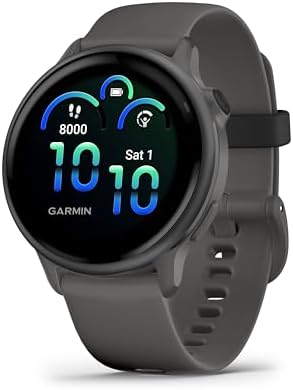
The Garmin v铆voactive 6 Amazon Exclusive 42mm GPS smartwatch is rated to eleven days, which pushes charging from a near-weekly task to a genuinely background routine. Multi-band GNSS keeps satellite lock in dense tree cover and urban canyons where single-band devices lose the signal. The model is listed across both Android and iOS as fully compatible, and the Garmin Connect app surfaces all training metrics without advertising a subscription. Anyone who travels frequently or trains away from power outlets will find the eleven-day rating alone difficult to overlook.
Who Should Buy Which Watch
The decision becomes clearer once the buyer profile is defined. Someone whose primary concern is stress, sleep quality, and resting heart rate will get more from the Sense 2 models than any other slim smartwatch in its category, because the continuous EDA sensor and ECG app provide a specific kind of health feedback that the Vivoactive 6 does not attempt to replicate. A premium subscriber can build a serious wellness journal around that data. For a different profile, the person who runs five kilometers three times a week, cycles on weekends, and occasionally joins a group hike, the Vivoactive 6 category does more of what matters. The longer GPS battery, broader sport profile library, and on-device music storage all support that lifestyle directly. The buyer who wears a smartwatch mainly as a wrist accessory and conversation piece will find neither device quite matches a fashion-forward line, but both offer a clean enough design for everyday wear.
Subscription Costs and Long-Term Ownership
The cost of ownership beyond the initial purchase deserves its own treatment, because it separates the two devices more sharply than any hardware spec. Fitbit Premium carries a recurring fee, and without it, the Sense 2’s advanced analytics, daily readiness detail, and long-term trend views remain locked. Garmin operates the opposite way: Garmin Connect is free for every buyer, and the platform updates continue regardless of subscription status. Over three or four years, that difference in recurring cost easily exceeds the price gap between the devices at launch. The Sense 2 is closer to a subscription-based health service packaged as a smartwatch, while the Vivoactive 6 is a complete product that requires no monthly fee to reach its full utility.
Warranty and serviceability also deserve a glance. Fitbit handles replacements through its own support channels, and the Sense 2 is not designed for user-accessible repair. Garmin maintains a global service network and a strong record of long-term firmware updates, a factor that buyers rarely consider at purchase but appreciate four years later. The Vivoactive 6’s thicker battery reserve also means fewer charge cycles over the life of the device, which tends to slow battery degradation. These are not headline features, but they shape the ownership experience more than the marketing pages suggest.
Final Assessment and Buying Criteria
Two criteria decide the purchase. If the device is meant to lower stress, improve sleep, and provide a window into the nervous system, the Fitbit Sense 2 stands as one of the few smartwatches designed specifically for that mission, and its ECG app gives it a function the Garmin cannot match. If the device is meant to support movement, extend battery life beyond weekly charging, and store music for phone-free training sessions, the Garmin Vivoactive 6 is the stronger partner. Price is not the deciding factor; the underlying philosophy is. Buy the watch that fits the behavior it was engineered to encourage, and the specification sheet becomes a confirmation rather than a mystery.
The segment itself continues to evolve, with EDA and AMOLED technology becoming more affordable and GNSS battery life climbing year after year. The buyer who chooses based on the health dimensions that personally matter, rather than the longest feature list, will find either device satisfying for years. Both the Sense 2 and the Vivoactive 6 represent their makers’ clearest statements about what a wrist-worn computer should do, and understanding that difference is more valuable than memorizing another spec sheet.