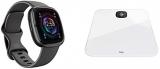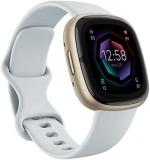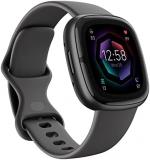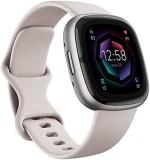
Choosing between the Fitbit Sense 2 and the Samsung Galaxy Watch 8 comes down to a single question: do you want a health-first tracker with a stress-management focus, or a full smartwatch that runs apps, takes calls, and pairs deeply with a Galaxy phone? The Sense 2 lineup approaches wearables from the wellness side, built around continuous body-response tracking and multi-day battery life. The Galaxy Watch8 collection takes a wider platform approach, wrapping health tools inside a polished AMOLED display and the Wear OS app ecosystem. This guide is written as a permanent reference for that decision, laying out the specs, the trade-offs, and exactly who should buy which watch.
| Feature & Selling Point | Fitbit Sense 2 | Samsung Galaxy Watch 8 |
|---|---|---|
| Primary Design Goal | Continuous health and stress monitoring | Full smartwatch with app ecosystem |
| Operating System | Fitbit OS (closed platform) | Wear OS (third-party apps supported) |
| Display Type | AMOLED touchscreen | AMOLED, 438 x 438 pixels |
| Available Case Sizes | Single unisex case size | 40 mm and wider options |
| Battery Life | Up to 6 days; fast charging | Roughly 1 to 2 days depending on use |
| Built-in GPS | Yes, built-in GPS | Yes, GPS and satellite positioning |
| Connectivity | Bluetooth; phone-tethered notifications | Wi-Fi and Bluetooth; optional cellular |
| Health Sensor Suite | Sense 2 with body-response and stress tools | BioActive sensor with heart, sleep, and body composition |
| Phone Compatibility | Android and iOS | Optimized for Samsung Galaxy phones |
| Third-Party Apps | Limited app library | Broad Wear OS app support |
| Calls and Messaging | Notification previews and quick replies | On-watch calls and full messaging |
| Sleep and Recovery Focus | Core Fitbit strength; sleep and stress scoring | Advanced sleep coaching via Samsung Health |
| Subscription Dependency | Fitbit Premium expands insights | Core health tools usable without a subscription |
| Best Fit For | Stress, sleep, and multi-day tracking | App users, Galaxy phone owners, smaller wrists |


The single most decisive row is battery life: the Sense 2 runs up to six days between charges, while the Galaxy Watch 8 typically needs a nightly charge. That gap changes how each watch fits into daily life, because a watch that lasts all week can be worn overnight for sleep tracking without anxiety, whereas the Galaxy Watch 8 demands a charging routine. The second decisive line is phone compatibility, since the Samsung experience is deepest on Galaxy hardware.
The Sense 2 Is Built Around Stress, Sleep, and a Week of Battery
Fitbit has long positioned the Sense 2 as its most health-focused smartwatch, and the hardware reflects that priority. The case houses an EDA sensor for detecting electrodermal activity, a continuous heart-rate monitor, and a skin temperature sensor that together support the body-response feature, which surfaces a daily readiness-style signal rather than a raw activity total. Rather than chasing app installs, the Sense 2 spends its processing budget on passive sensing: it can flag stress patterns, log sleep stages, and prompt a guided breathing or mindfulness session when the numbers point that way.
The battery claim of up to six days is central to that design. Continuous sensing, especially overnight skin temperature and heart-rate variability, only becomes useful when data collection is uninterrupted. A long runtime means the watch can stay on the wrist through several full sleep cycles without a charging break, which is precisely the window where the most useful health insights accumulate. Fast charging also means a last-minute top-up before a workout rarely leaves the tracker empty.
Where the Galaxy Watch 8 Pulls Ahead
The Galaxy Watch 8 is a different kind of device. It runs Wear OS, so it can install third-party apps, display richer notifications, and, in cellular-equipped variants, handle calls without a phone nearby. The 40 mm Graphite model pairs a 1.3-inch AMOLED screen with 438 x 438 pixel resolution, giving text-heavy alerts and maps a sharper canvas. Its connectivity stack includes Wi-Fi and satellite positioning, which matters for runners who want reliable GPS traces without carrying a phone.
The BioActive sensor array supports heart-rate tracking, sleep coaching, and body composition analysis, all surfaced through the Samsung Health app. The critical caveat is ecosystem depth: the full experience, including many advanced health features and deep app integration, arrives only when the watch is paired with a Samsung Galaxy phone. Paired with another Android phone or an iPhone, the Galaxy Watch 8 remains competent but loses part of its platform advantage.
If wrist size is a deciding factor, Samsung’s multiple case-size options deserve a look, and Samsung Galaxy Watch 8 3.2 cm AMOLED 40 mm Graphite Wi-Fi GPS is the smaller variant that suits slimmer wrists.
Health Tracking: Passive Insight vs Active Measurement
The two watches measure health differently, and that difference should drive the decision more than any single number. The Fitbit approach is passive and interpretive: sensors gather continuous streams and the algorithms translate them into simplified daily scores for stress, sleep, and readiness. The Sense 2 is the purest expression of that philosophy, with dedicated hardware for stress detection and a closed platform that keeps the experience focused.
Samsung’s approach is more open-ended. The Galaxy Watch 8 collects similar signals but places more control in the user’s hands, whether that means running a spot ECG, checking body composition, or reviewing detailed charts in Samsung Health. Users who enjoy interpreting their own data and cross-referencing metrics tend to prefer the Galaxy Watch 8. Users who want a clear, simple verdict each morning tend to prefer the Sense 2.
Weight, Fit, and Daily Wearability
The Sense 2’s unisex case sits in a mid-sized range that suits most wrists, but it comes in one size, so buyers with very small or very large wrists have less room to fine-tune the fit. Samsung’s multi-size strategy directly addresses this, since a 40 mm Galaxy Watch 8 sits relatively flat against slimmer wrists, and the AMOLED screen keeps a surprising amount of information legible at that scale. Thickness is also a meaningful factor: a thicker watch case snags on cuffs and feels obtrusive during sleep, which matters for anyone intending to wear a watch overnight.
Activities, GPS, and Training Use
Both devices handle the core activity set, including walking, running, cycling, and swimming, and both include built-in GPS. For runners who care about route accuracy or want pacing cues without a phone in hand, the Galaxy Watch 8’s satellite positioning and larger display give it an edge. For multi-day hikers or anyone who forgets to charge, the Sense 2’s runtime and simpler interface make it the more forgiving companion. The Sense 2 is also the stronger choice for guided stress-reduction exercises, since its breathing sessions are integrated directly into the on-watch experience.
- Fitbit Sense 2: up to six days of battery, built-in GPS, body-response and stress sensing, Android and iOS support.
- Galaxy Watch 8: Wear OS apps, AMOLED 438 x 438 display, Wi-Fi and satellite GPS, multiple case sizes, deep Galaxy phone integration.
- Deciding factor: charging frequency and phone ecosystem outweigh raw sensor counts for most buyers.
Who Should Buy Which Watch
Buy the Fitbit Sense 2 if you want to understand stress, sleep, and recovery more than you want a wrist-mounted smartphone. It rewards owners who keep it charged once a week, wear it overnight, and review simple scores rather than detailed charts. The absence of a broad app library is a feature in this context: fewer notifications, fewer distractions, and a longer runtime as a result. For buyers leaning toward the Fitbit platform, Fitbit Sense 2 Health and Fitness Smartwatch with built-in GPS is the reference device that anchors the entire comparison.
Buy the Samsung Galaxy Watch 8 if you already own a Galaxy phone and want a watch that extends that ecosystem, installs the apps you already use, and can make calls in cellular form. Its health tools are capable, but the platform is the headline, and the hardware’s display quality and size range make it the easier watch to live with on busy, screen-heavy days. The Fitbit brand’s health-first philosophy and the Samsung brand’s platform-first philosophy sit at opposite ends of the wearable spectrum, and neither is objectively superior.
Within each family, the surrounding ranges are worth exploring before committing: the Sense 2 series keeps the wellness-first brief across its variants, while the Galaxy Watch8 collection scales the same platform across several case sizes and finishes.
The final criterion is simple: pick the Sense 2 for a quiet week of health data, and the Galaxy Watch 8 for a connected day with everything on your wrist. Both are well-executed expressions of their platforms, and the right choice depends on whether your priority is insight or interaction.