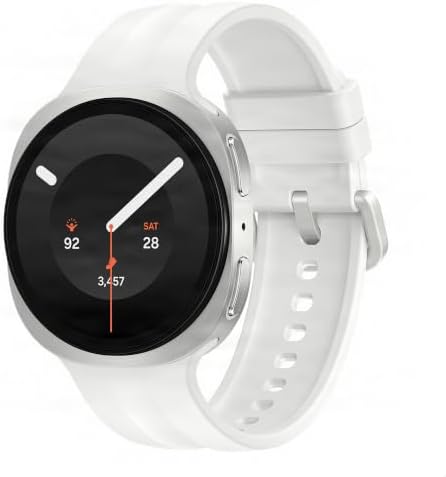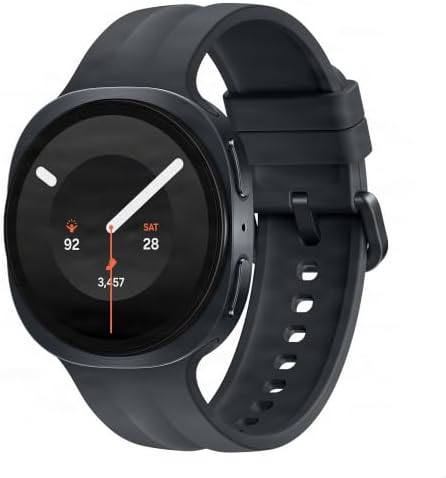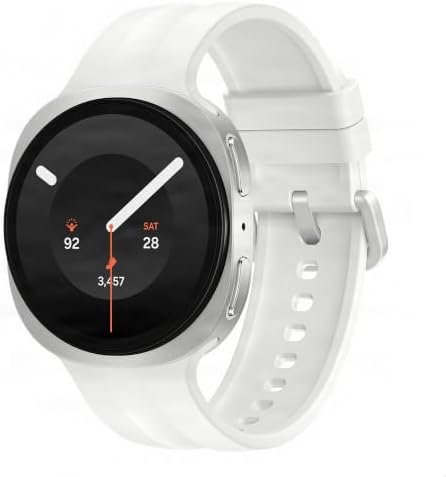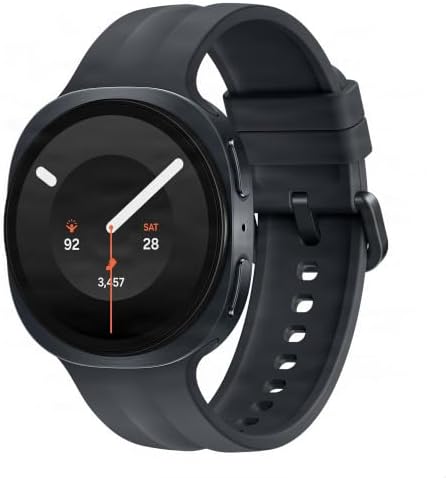
The Galaxy Watch9 collection and the Pixel Watch 5 collection answer the same Wear OS question with different priorities, and the right pick depends on the wrist and the phone in the pocket. This guide is built to be kept: it weighs the variables that change daily ownership, from battery headroom in the size actually worn to case geometry, health software tone, pairing friction and warranty exposure. A specification table is a starting point, never a verdict.
| Feature and Selling Point | Samsung Galaxy Watch9 | Google Pixel Watch 5 |
|---|---|---|
| Case size options | 40mm and 44mm | 41mm single size |
| Battery cell (compact model) | 390mAh in the 40mm case | Not published in supplied sources |
| Processor platform | Snapdragon Wear Elite | Not published in supplied sources |
| Case geometry | Cushion shape with raised shoulders | Rounded case, domed display edge |
| Physical controls | Rotating bezel plus buttons | Touch and crown interaction |
| Connectivity variants | Bluetooth and LTE options | Wi-Fi configuration listed |
| Health software emphasis | Sleep coaching and heart management | Broad fitness tracking base |
| Assistant layer | Galaxy AI feature set | Gemini assistance |
| Phone pairing flexibility | Broader Android support | Tuned for Pixel handsets |
| Warranty terms | Three-year UK warranty | Varies by region |
| Entry price signal | From $379.99 for 40mm Bluetooth | Not published in supplied sources |
| Display protection | Sapphire-grade crystal on premium SKUs | Curved cover glass |
| Strap attachment | Proprietary quick-release | Google-specific band system |
| Update cycle outlook | Samsung multi-year Wear OS cadence | Google multi-year Wear OS cadence |
| Best-fit buyer | Android power user wanting size choice | Pixel owner wanting a compact watch |
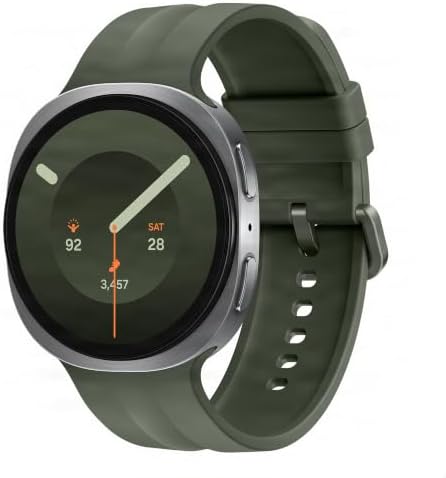
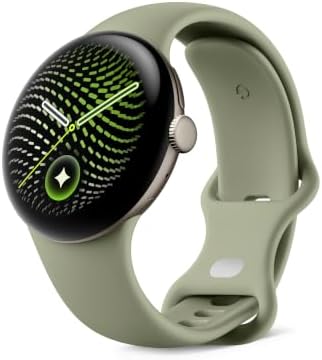
Two rows in that table decide most purchases before any deeper comparison begins. Battery headroom in the smaller case and the availability of two case sizes shape daily experience, while the assistant and pairing rows quietly settle the rest. A Pixel handset in a pocket makes the Pixel Watch 5 the lower-friction option; a Galaxy phone reverses that logic almost entirely.
Battery Headroom in the Size You Would Actually Wear
Samsung’s own newsroom reports that the 40mm Galaxy Watch9 carries a 390mAh cell, described as 20 percent larger than the equivalent Galaxy Watch8 and 30 percent larger than the Galaxy Watch7. That figure reframes the compact model as a genuine multi-day candidate rather than a concession to small wrists. Buyers who choose the 40mm for comfort gain slack that the 41mm Pixel Watch 5 owner must manage more deliberately.
Capacity is not runtime. Display brightness, always-on mode, LTE activity and overnight sleep tracking all draw from the same reserve, so the honest reading is comparative rather than absolute. Samsung has narrowed the gap between its small and large variants, which matters most for anyone running continuous heart and sleep monitoring. A cellular unit with an always-on display will drain faster than a Bluetooth model, and the larger cell absorbs part of that penalty.
Charging habits matter more than raw numbers. A short top-up during a morning shower often covers a full day, and the reserve in the small Galaxy Watch9 case gives the 40mm owner breathing room. Frequent travellers who forget chargers notice the difference first, and that is a practical argument rather than a marketing one.
Case Geometry, Materials and Wrist Presence
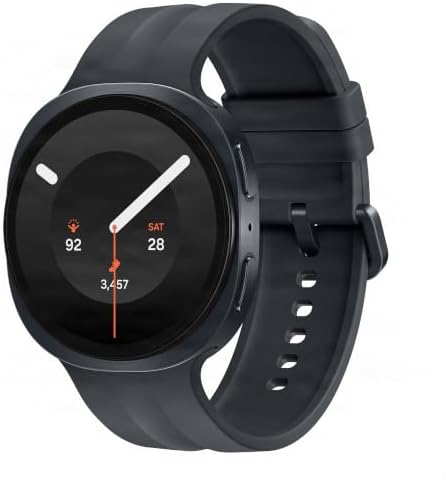
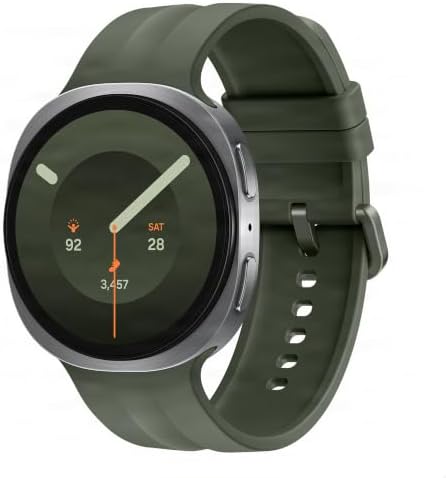
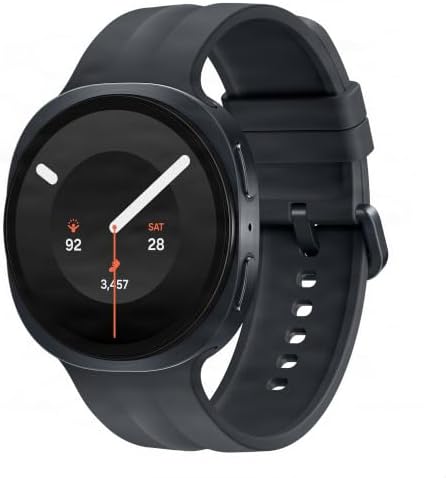
The Galaxy Watch9 returns to a cushion-shaped case, a silhouette borrowed from older tool-watch geometry that gives the watch squared shoulders above the strap. That shape reads larger than its nominal diameter, so the 40mm version has real presence on the wrist, and the physical rotating controls remain the better interaction method when hands are wet, gloved or moving. The Galaxy Watch9 models split across 40mm and 44mm, letting buyers choose by wrist size rather than settle for one option.
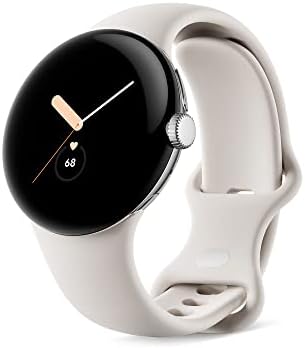
Google’s design is sculptural rather than architectural. The domed display curves away at the edges to create a jeweller’s bezel effect, and the rounded case flows into a band that suits smaller wrists and formal clothing. The trade-off is a single 41mm size for every buyer, and heavier wrists may find it modest. The Google Pixel Watch 5 (41 mm) is a case built around restraint rather than options, and the Pyrite Case with Olive Band finish underlines that intent.
Materials decide how a watch ages. Stainless steel takes scratches but develops character, while aluminium keeps weight down and shows wear sooner. Premium SKUs in Samsung’s range move to sapphire-grade crystal, which resists everyday abrasion better than ordinary cover glass, an unglamorous detail that pays off in year three.
Health Sensing and the Software Philosophy Behind It
Samsung lists sleep coaching and heart management among the Galaxy Watch9’s headline software features, wording that reflects a broader shift in the category. Sensors are now commodity hardware, and value sits in how assertively the software intervenes. Samsung’s coaching model leans toward structured recommendations, nudging sleep timing and recovery habits with the tone of a trainer rather than a passive recorder.
The Pixel Watch 5 positions itself around broad health and fitness tracking reinforced by Gemini, a different philosophy in which the assistant interprets data conversationally. Instead of a score chart, the user asks a question and receives an answer about the week. Whether that is more useful than a push notification is a personal judgement, but it defines the real distinction between the two devices.
Neither approach should be dismissed on the basis of a spec sheet. A prospective buyer should ask what they will actually do with the data: interpret it, or simply glance at it. The device that matches that habit is the correct one, and that question is more decisive than any sensor count.
Pairing Friction and Ecosystem Reality
Samsung’s own support documentation shows how complicated cross-brand pairing can become. Samsung states that the Galaxy Watch5 generation required Android 8.0 and 1.5GB RAM or higher, and further advises that those particular watches were not supported on non-Samsung Android devices. Samsung separately lists newer progression requirements around Android 11.0 with 1.5GB RAM, and community threads report pairing issues between Galaxy watches and Pixel handsets running newer Android releases. None of that is fatal, but the pairing question deserves a check before purchase rather than after.
Google has no equivalent complication inside its own walls: a Pixel phone pairs with a Pixel Watch quickly and with fewer hand-offs. The trade-off is that leaving the Pixel ecosystem diminishes parts of the experience. The Google brand works best as a set, which is either a strength or a trap depending on how the buyer feels about switching costs.
Five Questions That Settle the Purchase
A short written checklist prevents an impulse decision. Five questions resolve most of the choice:
- Phone brand: matching the watch to the handset removes the most friction.
- Case size: two sizes beat one for anyone with a larger or smaller wrist.
- Battery expectation: how many nights away from a charger is realistic?
- Data habit: do you read recommendations or prefer asking questions?
- Warranty terms: a longer published warranty changes long-term ownership cost.
Applying those criteria produces an unusually clean split. The Samsung Galaxy Watch9 AI 44mm Cushion Silver LTE is the pick for anyone who wants independent cellular coverage, a larger cushion case and an interface driven by physical controls. Its Snapdragon Wear Elite platform, larger cell in the compact version and published three-year warranty make a strong case for a buyer who keeps a watch across several phone upgrades.
The 41mm Pixel Watch 5 suits the opposite profile: a Pixel owner with a smaller wrist who values understated design, Wi-Fi use and Gemini-based assistance. It will feel slightly more like jewellery and slightly less like a sports instrument, which is exactly why it appeals to people who never wanted a wrist computer.
Long-Term Value Beyond the First Month
The Samsung brand’s wearable line spans several generations, and that continuity matters for buyers entering the market. Because Bluetooth Galaxy Watch9 pricing starts at $379.99 for the 40mm variant, as listed on Samsung’s own storefront, the range covers a band of price points rather than a single luxury figure. Samsung also markets the series as AI-assisted, positioning the watch around computational features rather than hardware bragging rights. That positioning should be read as a statement of intent from the manufacturer, not an independent verdict.
Ownership cost also includes straps, chargers and repairs. Proprietary band systems on both sides limit third-party choice, though quick-release adapters soften the impact. Annual replacement of a charger or band is rare, but glass scratches and battery degradation are the two recurring expenses that surface around year two. Sapphire crystals and larger battery reserves reduce those costs over time on the Samsung side.
Software Support and the Version Question
Both devices run Wear OS with manufacturer layers, and both vendors operate multi-year update cycles. The distinction lies in what updates actually address. Samsung’s update narrative tends to add features inside its own health and AI framework, while Google’s leans toward assistant improvements and integration with its broader services. Neither approach is objectively superior, but a buyer should compare what the two companies historically delivered rather than what either promises.
The Google band attachment system and domed display change the repair calculus as well, since curved glass chips cosmetically at its edges more readily than a flat crystal behind a raised bezel. Buyers who judge a device by how it looks in year three should weigh that detail carefully, because it affects both appearance and resale value.
Selecting Between the Two Without Regret
The easiest way to regret a smartwatch purchase is to buy the one that reviews best rather than the one that matches a daily routine. A Galaxy phone owner who trains frequently, takes calls from the wrist and wants physical controls has an obvious answer. A Pixel owner who values visual restraint and prefers voice interaction has an equally obvious answer in the other direction.
For everyone between those positions, three tie-breakers settle it: battery margin in the size you would actually wear, warranty length as a proxy for manufacturer confidence, and whether two case sizes are necessary for a comfortable fit. Those variables remain stable for as long as the device is owned, which is precisely why they deserve more weight than launch-day enthusiasm.
A wearable is now a relationship purchase rather than a gadget purchase. The watch that syncs with the phone already in daily use, charges on a schedule that fits real life and reports health data in a language its owner instinctively trusts will be worn for years. That fit matters more than any single column in a specification chart, and it is the only criterion that survives the honeymoon period.