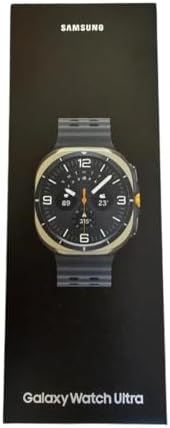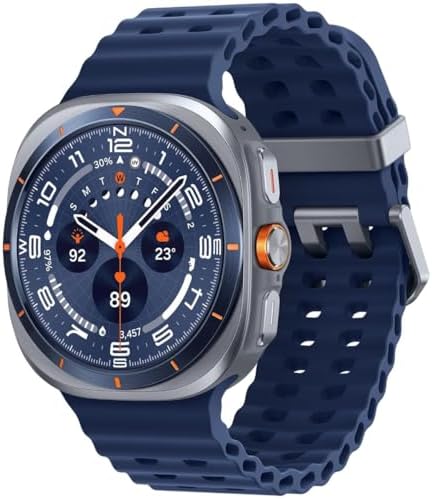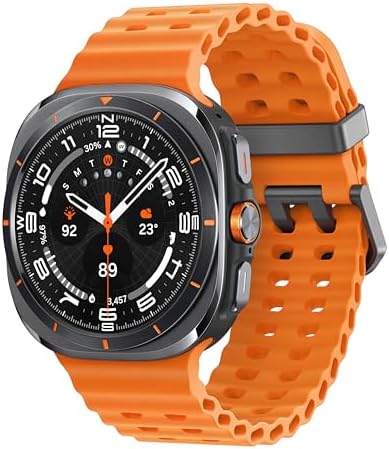
The Samsung Galaxy Watch Ultra 2 and the Galaxy Watch 9 share a health platform but almost nothing else. One carries an 800 mAh battery inside a 47 mm titanium case. The other offers a 40 mm or 44 mm cushion-profile body with a 390 mAh cell and a 3,000-nit Super AMOLED panel. The gap between them is not a gap in quality; it is a gap in intent. This guide is built to be kept open while you decide, because the right answer depends on three measurable things: how long you leave a charger behind, how large a case your wrist tolerates, and whether you want a training instrument or a daily companion.
Both sit inside a Samsung smartwatch lineup that now splits into distinct tiers rather than one continuous ladder, and this pair occupies the two most useful ends of it.
| Feature and Selling Point | Galaxy Watch Ultra 2 | Galaxy Watch 9 |
|---|---|---|
| Case Size and Footprint | 47 mm single size | 40 mm and 44 mm options |
| Display | Large outdoor-tuned panel for oversized data fields | 1.34-inch (438 x 438) on 40 mm; 1.47-inch (480 x 480) on 44 mm, Super AMOLED, up to 3,000 nits |
| Battery Capacity | 800 mAh (typical) | 390 mAh |
| Case Material | Titanium cut | Cushion-profile metal case |
| Recommended Activity | Trail running, diving, cycling, multi-day exposure | Daily wear, sleep tracking, office and commute |
| Band Philosophy | Lighter, softer bands for 24/7 wearability | Everyday bands matched to the cushion case |
| Health Tracking Approach | Precise biometric capture during hard effort | Sleep coaching, heart management, AI-driven guidance |
| Connectivity | LTE available | LTE available |
| Platform and Processing | Built for sustained GPS and sensor load | Snapdragon Wear Elite platform |
| Wrist Presence | Substantial, tool-like, clearly visible | Compact on 40 mm, moderate on 44 mm |
| Best Fit for Wrist Size | Medium to large wrists | Small to medium wrists on 40 mm |
| Charging Cadence | Longer intervals between charges | Overnight charging routine recommended |
| Primary Trade-Off | Bulk and a single case size | Smaller battery limits multi-day use |
| Who It Is Built For | Athletes and travellers who resent a charger | Buyers who want refinement and coaching over endurance |
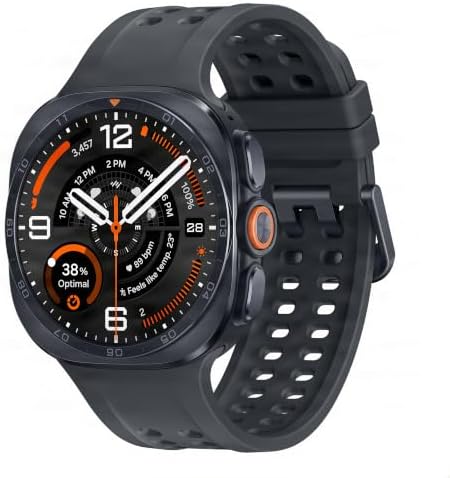
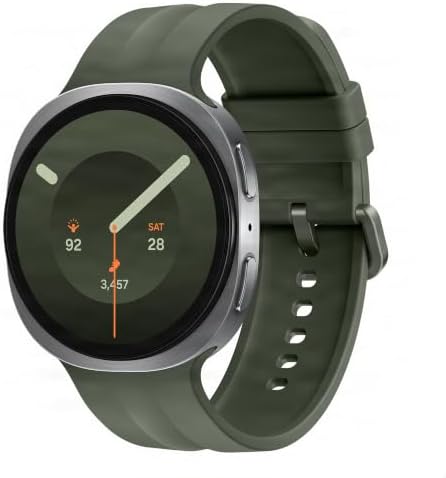
Two rows in that table settle most purchases. The 800 mAh cell in the Ultra 2 is roughly double the 390 mAh unit in the Watch 9, and the titanium case changes both weight distribution and long-term wear resistance. Everything else, from LTE to sensor breadth, is closer than the marketing suggests.
Battery Endurance and What It Actually Changes
Battery capacity is the least glamorous specification and the one that reshapes daily behaviour. Samsung specifies a typical 800 mAh battery for the Galaxy Watch Ultra 2, while the Galaxy Watch 9 carries a 390 mAh cell. In practice that gap determines whether the watch sleeps on your wrist or on a charging puck.
Sleep tracking only works when the device stays on overnight. A larger cell makes multi-day wear realistic, which means continuous heart-rate sampling, blood-oxygen readings, and sleep staging accumulate without interruption. The Watch 9 asks for a steadier routine: charge during a morning shower or at the desk, then wear it through the night. Neither approach is wrong, but only one survives a weekend without a power outlet. For travellers, backpackers, and anyone who has landed in a foreign city with a dead smartwatch, the Ultra 2 removes a recurring chore rather than simply adding a number to a spec sheet.
The same cell supports the Ultra 2’s positioning around trail running, diving, and cycling, where GPS logging draws heavily on the battery. A watch that must be recharged mid-activity defeats the purpose of tracking it at all.
Titanium, Weight, and the Question of Wearability
A titanium case is often framed purely as a durability claim, but its more interesting effect is on weight distribution. The Galaxy Watch Ultra 2 uses a titanium-cut housing at 47 mm, and Samsung pairs it with lighter, softer bands explicitly to support 24/7 wearability and more precise biometric capture. A bulky watch that shifts on the wrist produces noisier sensor data, so strap design is a measurement decision as much as a comfort one.
That logic points to a single case size engineered thoroughly rather than a spread of variants, which is exactly the approach behind the Samsung Galaxy Watch Ultra 2 47 mm Titanium Grey LTE. The simplicity has a cost. Buyers with smaller wrists may find 47 mm imposing, and there is no 40 mm escape hatch. The Watch 9 answers that problem directly with two case sizes, and its cushion profile sits closer to the wrist on the smaller option. Anyone who has dismissed a large sports watch after a week will understand why this row matters more than the material badge.
Durability Expectations
Titanium resists scratches and corrosion better than coated aluminium, and it holds up against saltwater exposure during diving sessions. It is also lighter than stainless steel at comparable volume, which offsets some of the 47 mm footprint. The trade-off is cost rather than compromise; this is a structural choice aimed at buyers who keep a watch for years rather than seasons.
Comfort Over Long Sessions
Band material matters more than most reviews admit. Soft, light bands reduce motion artefact during running and cycling, which protects the accuracy of heart-rate readings taken mid-effort. A titanium case paired with a compliant strap keeps a heavy watch stable, and stability is the precondition for any credible training metric.
Display and the Two Kinds of Legibility
The Galaxy Watch 9 publishes its screen credentials plainly. Samsung lists a 1.34-inch (438 x 438) Super AMOLED panel on the 40 mm model and a 1.47-inch (480 x 480) panel on the 44 mm model, with brightness reaching up to 3,000 nits. That figure is the practical dividing line: readable notifications in direct midday sun, glanceable turn-by-turn cycling directions, and clear text at arm’s length without cupping a hand over the glass. A cushion-format case on the Samsung Galaxy Watch 9 AI 44 mm Cushion Silver LTE also keeps the display visually tethered to the strap line, which reduces the sense that a screen is bolted onto a case.
The Ultra 2 takes a different route. Instead of advertising peak nits, it is positioned around legibility during outdoor activity, where the problem is rarely brightness alone. Glare, wet glass, gloves, and vibration all interfere. A larger 47 mm canvas gives more room for oversized data fields, which is why endurance athletes gravitate towards bigger displays even when they dislike the bulk. The Watch 9 wins the specification comparison on paper; the Ultra 2 wins on usable surface area during a rain-soaked descent.
Health Sensors and the Meaning of Accuracy
Both watches sit on the same Samsung health platform, and both are described by Samsung as health companions for the wrist. The distinction is one of emphasis. The Ultra 2 is presented around highly precise biometric data tracking during demanding activity, where motion and sweat degrade optical heart-rate signals. The Watch 9 is presented around sleep, heart management, and coaching, which places the emphasis on interpretation rather than raw capture.
This is not a case of one device lacking a sensor. It is a case of different tuning priorities. A diver cares about water resistance and pressure tolerance. A trail runner cares about GPS lock and elevation accuracy. A desk-bound buyer cares about a morning readiness score that explains a restless night. Note the platform distinction as well: the Watch 9 runs on the Snapdragon Wear Elite platform, which shapes responsiveness for AI-driven coaching features, while the Ultra 2 is engineered for sustained GPS and sensor load over long sessions. Choose the tuning that matches your worst-case day, not your average one.
Size, Fit, and the Decision Most Buyers Regret
Case diameter is the specification that generates the most returns. A 47 mm watch on a 155 mm wrist overhangs the wrist edges, which affects comfort, sensor contact, and the likelihood of knocking the bezel against doorframes. Samsung’s own comparison materials present the Watch 9 in 40 mm and 44 mm, opening a route for smaller wrists that the Ultra 2 simply does not offer.
There is a counter-argument, and it is legitimate. A single case size lets engineers optimise every internal component around one volume, which is how the Ultra 2 accommodates its 800 mAh cell without becoming unusable. Multi-size ranges, by contrast, must compromise battery capacity on the smaller model. Buyers who want a compact device pay for it in endurance; buyers who want endurance pay for it in footprint. Neither is a manufacturing failure, just a different answer to the same equation.
Who Should Buy the Galaxy Watch Ultra 2
- Trail runners and hikers who log multi-hour GPS activities and dislike carrying a charger
- Divers and open-water swimmers who want a titanium case against saltwater and repeated exposure
- Frequent travellers for whom overnight charging is one more task to remember
- Cyclists who need a large, glove-friendly data field rather than a compact screen
The criteria that decide it are simple: your wrist can carry 47 mm comfortably, and your longest activity outlasts a single charge on a smaller watch.
Who Should Buy the Galaxy Watch 9
- Buyers with smaller wrists who want a 40 mm option without dropping core health features
- Sleep-focused users who value coaching and readiness insight over multi-day battery life
- Everyday wearers who prefer a cushion case that reads as jewellery rather than equipment
- Bright-light users who benefit from a 3,000-nit Super AMOLED panel
The deciding questions here are equally specific: do you charge every night anyway, and does a smaller case improve how often you actually wear the device?
The Criteria That Should Settle It
Strip away the marketing and four measurable criteria remain. First, battery capacity against your longest realistic time away from a charger. Second, case diameter against your wrist measurement, which no review can decide for you. Third, panel brightness and size against the light conditions you actually encounter. Fourth, sensor tuning against whether your priority is a hard training session or a better night’s sleep.
Answer those in order and the choice becomes obvious. The people who regret a smartwatch purchase usually chose on aesthetics first and battery second. Reverse the order and the Galaxy Watch 9 models cover the daily-wear majority comfortably, while the Ultra 2 covers the minority who treat a watch as field equipment. Both are competent; only one matches your week.
A wrist is a small piece of real estate, and what belongs on it depends less on category leadership than on the honest shape of your days. The Ultra 2 is built for the long outing and the unplanned extension. The Watch 9 is built for the routine that repeats, with the refinements that make repetition pleasant. Choose the one whose limitations you can live with, and the features take care of themselves.