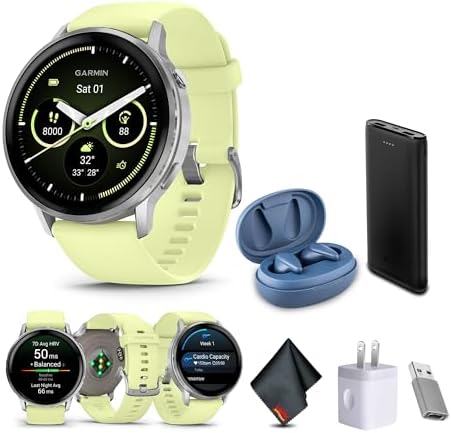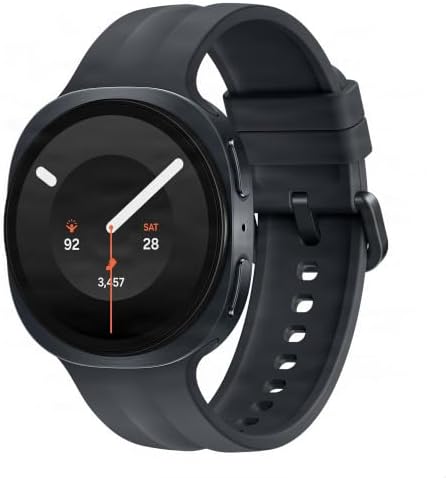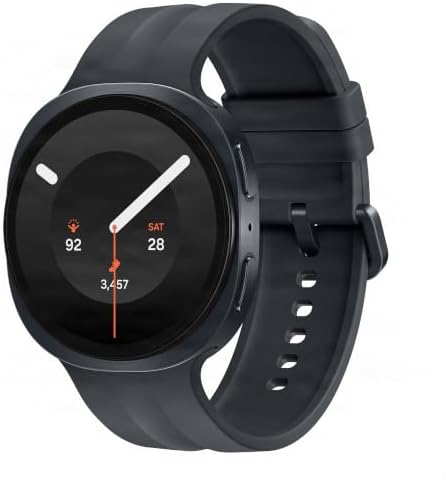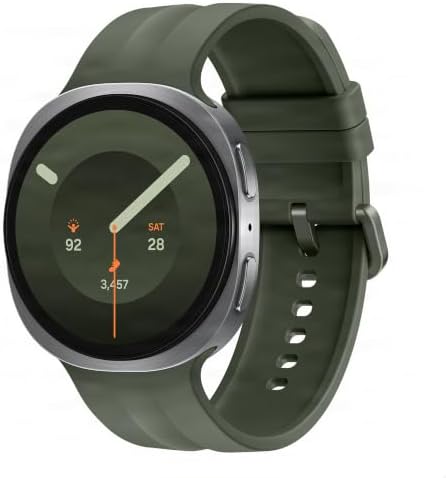
The Garmin Venu 4 series and the Galaxy Watch9 lineup sit in the same premium smartwatch bracket while pulling in opposite directions. One is engineered around multi-day endurance, a broad sport profile library, and a display that stays readable in harsh sunlight; the other is built around standalone LTE, an AI-driven health coaching layer, and a cushion case silhouette. This guide is written as a permanent reference for buyers weighing the two: the comparison table below isolates the specifications that genuinely change a purchase decision, and every section after it explains the trade-offs behind those numbers.
| Feature & Selling Point | Garmin Venu 4 | Samsung Galaxy Watch9 |
|---|---|---|
| Display Type | AMOLED touchscreen, sunlight legible | AMOLED, cushion case design |
| Stated Battery Life | Up to 12 days | 390 mAh cell, daily charging |
| Connectivity | GPS with phone pairing | LTE standalone |
| Case Size Options | 41mm and 45mm | 44mm (listed variant) |
| Built-in Flashlight | Yes | Not listed |
| ECG App | Yes | Heart management suite |
| Sports App Count | 80+ built-in apps | Core activity categories |
| Speaker and Microphone | Yes, phone-paired calls | Yes, with LTE calling |
| Processor Platform | Garmin wellness chipset | Snapdragon Wear Elite |
| Sleep Tracking Depth | Sleep score plus sleep monitor | Sleep and health coaching |
| Health Coaching Model | Training load and recovery focused | AI-driven coaching |
| Case Material Finish | Slate and black composite | Silver cushion steel look |
| Warranty Coverage | Regional Garmin warranty | 3 years (UK version) |
| Best Suited To | Multi-day training and outdoor use | Phone-free daily wear and calls |
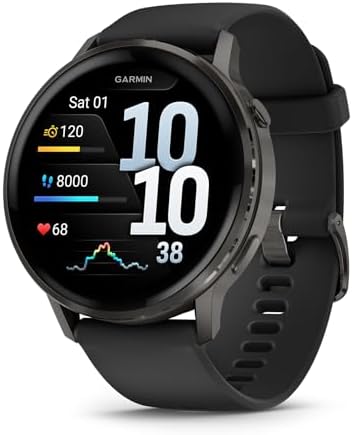
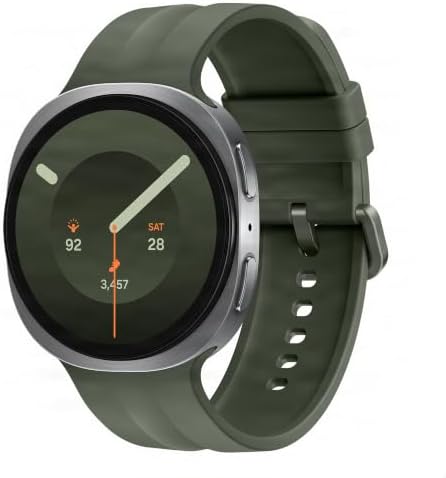
The single row that reframes the entire decision is battery architecture. Garmin states the Venu 4 reaches up to 12 days between charges, while the Galaxy Watch9 carries a 390 mAh cell typical of LTE smartwatches that need daily top-ups. Everything else follows from that split: the Venu 4 can afford continuous GPS sampling and always-on health metrics, whereas the Galaxy Watch9 invests its power budget in a cellular radio and an on-device AI coaching layer.
Battery Philosophy and the Daily Charging Ritual
Battery life is not a spec sheet footnote; it dictates how someone actually wears a watch. A device rated to 12 days can be worn for a week-long hiking trip, a string of night shifts, or a fortnight of business travel without a charger entering the packing list. Buyers of the Garmin Venu 4 45mm are effectively purchasing the freedom to leave charging infrastructure behind, and that freedom compounds across months of ownership.
The Galaxy Watch9 takes the opposite stance: a 390 mAh battery paired with an LTE radio means the watch assumes a nightly charging habit. That routine is not a flaw so much as a design priority, because the power is spent on standalone calling, streaming, and the AI coaching engine running on the Snapdragon Wear Elite platform. The key question for a prospective buyer is whether a bedside charger is already part of the evening routine. For anyone who removes a watch before sleep anyway, the battery gap matters far less than it appears on paper.
How Each Battery Choice Affects Sleep Data
Paradoxically, the charging habit can help sleep tracking. A watch that charges nightly is always topped up for overnight wear, and both devices push sleep scores, stages, and overnight heart data. Garmin’s implementation pairs its sleep monitor with a training-load context, so a poor night is read against the previous day’s workout intensity. Samsung’s model wraps sleep into broader health coaching, feeding overnight data into next-day guidance that also weighs heart management metrics.
The Travel Scenario
Frequent flyers tend to notice two things quickly: a watch that needs a charger in a different country, and a watch that can make a call when a phone is in a bag. Those priorities rarely coexist. Travelers who want minimal fuss favor the multi-day rating; travelers who want a phone-free call at the airport gate favor standalone LTE. Neither is universally correct, but the itinerary usually makes the answer obvious within a week of honest self-assessment.
Health Sensors and the Depth of Coaching
Both watches support ECG readings, continuous heart rate, and overnight wellness tracking, yet the coaching layer built on top of those sensors differs in character. The Garmin ecosystem frames health data through training physiology: recovery time, training load, VO2 max estimates, and body battery energy reserves. A runner checking a morning readiness score gets a recommendation about whether to push intervals or back off to zone two, and the 80+ sports apps give each session a dedicated profile with relevant metrics.
The Galaxy Watch9 positions its AI coaching as a broader lifestyle interpreter, blending sleep, heart management, and activity patterns into plain-language guidance rather than athlete-specific periodization. According to Samsung, the device is marketed around AI-driven health management rather than pure sports science. That distinction matters: someone training for a marathon will find more actionable structure in Garmin’s physiology model, while someone managing general wellness and stress will find the Galaxy Watch9 guidance more approachable to read at a glance.
- Recovery framing: Garmin reports recovery windows and energy reserves tied to workout intensity
- Coaching tone: Samsung leans on conversational AI suggestions across sleep, heart, and activity
- Sport breadth: Garmin lists 80+ built-in sport profiles; Samsung focuses on core activity categories
- Heart tools: Both include ECG capability, though the surrounding dashboards differ in depth
What separates the two in daily use is what a wearer does with the data after glancing at the watch. If the answer is “adjust tomorrow’s session,” the Garmin model is tighter. If the answer is “understand why I slept badly and what to change tonight,” the Samsung coaching layer speaks more directly.
Design, Materials, and Wrist Presence
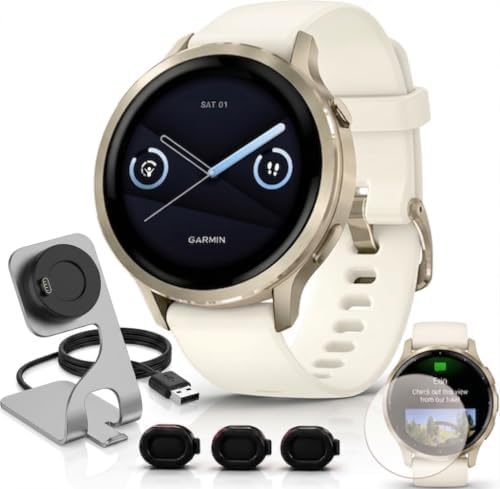
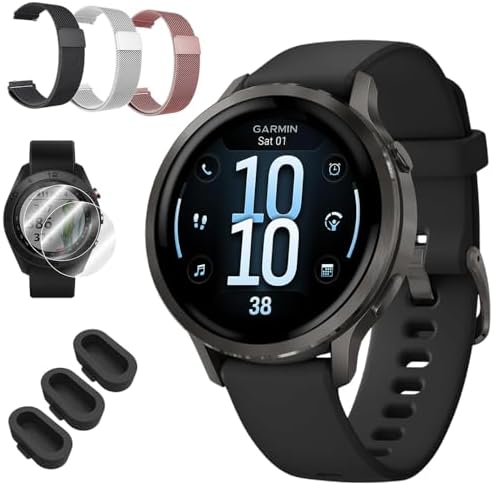
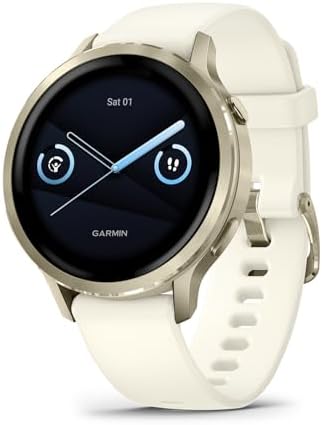
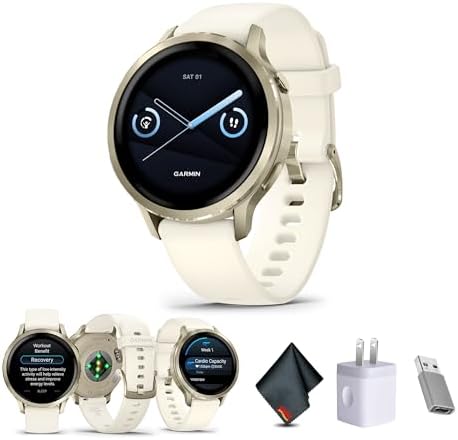
Garmin offers the Venu 4 in 41mm and 45mm cases, a range that lets smaller wrists avoid an oversized profile while larger wrists still get a substantial display. The slate and black finish on the 45mm variant reads as a restrained sport watch, and the bright AMOLED panel holds legibility in direct sunlight, a non-negotiable quality for anyone who trains outdoors at midday.
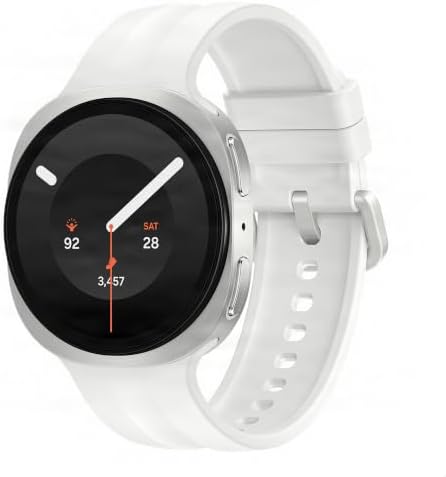
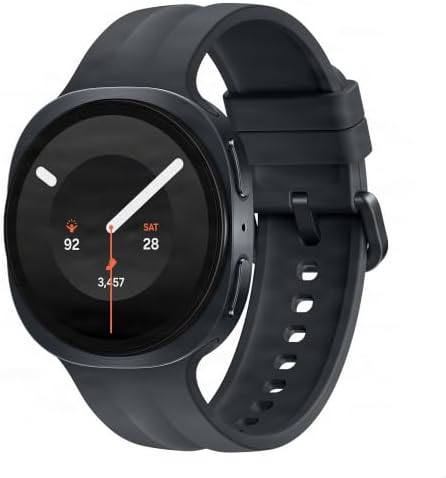
The Galaxy Watch9 arrives with a cushion design and a silver steel-look case, which pushes it closer to a classic round watch silhouette than a pure fitness device. That styling decision broadens its wardrobe range: the cushion profile pairs more readily with business casual than the flatter, sportier bezel language of the Venu 4. The trade-off runs the other way during high-intensity activity, where a lighter, purpose-built sport case tends to sit more securely and collect less sweat against the skin.
One practical detail separates them in dim conditions: the Venu 4 includes a built-in flashlight, a small feature that becomes disproportionately useful on night walks, in tents, and during power cuts. The Galaxy Watch9 relies on display brightness and software tools instead. Buyers who have ever fumbled for a phone torch at night will recognize the value immediately.
Connectivity, Calls, and Phone Independence
LTE standalone connectivity is the Galaxy Watch9’s sharpest functional edge. A cellular watch can take calls, send messages, and stream music without a paired phone nearby, which matters for runners who dislike carrying a handset, parents who want a reachable wrist device, and anyone whose phone regularly sits in a bag rather than a pocket. Samsung backs the platform with Snapdragon Wear Elite silicon, and the device includes a speaker and microphone to support voice interaction and calls.
The Venu 4 also includes a speaker and microphone, enabling voice features and phone-paired calls, but its core connectivity model assumes a nearby smartphone for communication. Garmin’s GPS performance and training features are fully functional independently, so the dependence is specifically about messaging and voice rather than exercise tracking. A runner can log a fully mapped outdoor session without a phone; answering a call mid-run requires one. That is a narrower limitation than the spec sheet implies, but it is decisive for the phone-free use case.
Software Ecosystem and Long-Term Usability
Garmin Connect anchors the Venu 4 experience with a deep activity archive, long-term trend charts, and export tools that appeal to data-curious users. The platform has matured over many device generations, and settings, watch faces, and data fields can be adjusted in granular detail. The Garmin brand’s multi-sport smartwatch range shares this ecosystem, so someone who owns Garmin cycling computers or chest straps gains incremental value from choosing another Garmin device.
Samsung’s wearable software leans into AI interpretation and tight integration with Galaxy phones. Samsung’s wearable lineup treats sleep and health coaching as headline capabilities across its range, and the 3-year UK warranty signals confidence in hardware longevity. Buyers already inside the Galaxy phone ecosystem will find pairing and notification behavior frictionless, while users on other Android devices should verify feature availability before committing. The Samsung Galaxy Watch9 44mm LTE is a device whose usefulness scales with how much a buyer values that ecosystem link.
Who Should Buy Which
The choice comes down to a handful of buyer profiles. Multi-sport athletes, hikers, and anyone who resents a nightly charging cable should choose the Venu 4 in a case size that fits their wrist. The 12-day rating, 80+ sport profiles, flashlight, and physiology-based recovery data form a coherent package for people who measure their week in training blocks rather than calendar appointments.
Commuters, Galaxy phone owners, and buyers who want a phone-free wrist phone should look at the Samsung wearable lineup, where LTE calling, AI health coaching, and a dressier cushion case make the Galaxy Watch9 a daily-wear companion rather than a training instrument. The 3-year UK warranty adds straightforward peace of mind for buyers who plan to keep the watch through several contract cycles.
- Choose the Venu 4 if: you train most days, travel without chargers, want a torch on your wrist, or prefer smaller 41mm sizing
- Choose the Galaxy Watch9 if: you want calls without a phone, use a Galaxy handset, prefer AI-worded wellness advice, or value a longer warranty
- Decide by one question: does a nightly charge feel like a chore or a habit you already keep?
The smartwatch market has spent a decade chasing convergence, yet the Venu 4 and Galaxy Watch9 prove that divergence still creates better products. One watch treats the wrist as a training instrument that must survive a week of neglect; the other treats it as a connected extension of a phone-dependent life. Neither position is a compromise. The right choice is simply the watch whose daily assumptions match the buyer’s own, and that match, once made, tends to last for years of steady wrist time.