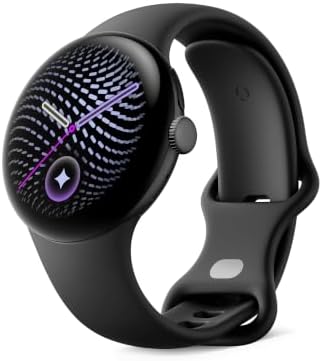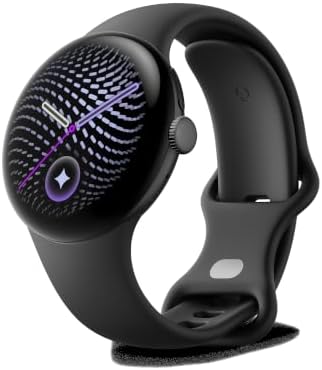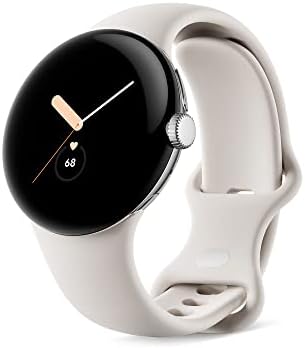
The Google Pixel Watch 5 and the Apple Watch Series 12 both arrive as mature health instruments rather than novelty wrist screens, and the gap between them is now defined by philosophy rather than specification counts. One wraps a Fitbit-derived sensor stack inside a domed circular case; the other compresses Apple silicon and watchOS continuity into a rectangular panel. This guide is written to be saved and revisited, because the decision rarely hinges on one figure and almost always hinges on which compromises a buyer can live with for years.
The table below isolates the dimensions that genuinely shift a purchase: sensor validation, charging rhythm, display geometry, recovery scoring, and ecosystem commitment. Superficial attributes such as colorways or brand prestige are excluded, since they rarely survive the first month of ownership.
| Decision Criterion | Google Pixel Watch 5 | Apple Watch Series 12 |
|---|---|---|
| Sensor Platform | Fitbit-derived optical array with continuous heart rate and SpO2 | Apple optical heart sensor with published accuracy benchmarking |
| Heart Rate Validation | Proprietary Fitbit algorithms | Included in Apple’s published Heart Rate Accuracy Study |
| Display Geometry | Domed glass over a 41mm circular case | Flat LTPO OLED in 42mm or 46mm rectangular case |
| Always-On Behavior | Ambient display with reduced refresh | LTPO variable refresh down to 1Hz |
| Battery Cycle | Full-day use, nightly charge expected | Full-day use, fast-charge top-up supported |
| Operating System | Wear OS with Gemini assistance | watchOS with Siri and Apple Intelligence hooks |
| Phone Dependency | Android pairing required for full function | iPhone pairing required for full function |
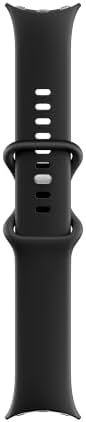
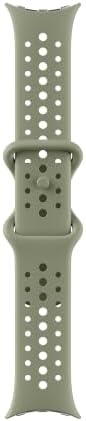
| Band Ecosystem | Proprietary quick-release lug system | Lugs shared across multiple Apple Watch generations |
| Sleep and Recovery | Fitbit sleep staging with readiness scoring | Sleep stages plus wrist temperature trends |
| Safety Tooling | Fall detection and emergency calling on cellular models | Fall detection, crash detection, and emergency SOS |
| Fitness Depth | Daily readiness focus with guided workouts | Training load, GPS routes, and deep third-party integration |
| Repair and Service Path | Limited third-party service network | Broad authorised service coverage |
| Best Fit For | Android users wanting round styling with Fitbit health depth | iPhone users wanting validated sensors and tight app continuity |
| Resale Liquidity | Moderate secondary market | Strong secondary market for prior generations |
Best-Matched Comparison Picks
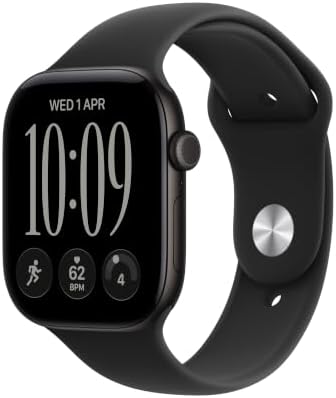
Apple Watch Series 12 GPS 46mm Smartwatch Black Aluminium Case See Price on Amazon.co.ukTwo rows decide most purchases. Apple subjects its optical sensor to a published accuracy protocol that Google does not currently match in public documents, while the Pixel Watch 5 answers with a 41mm circular silhouette and a Fitbit health lineage that predates the modern smartwatch era. Everything below translates those differences into daily use.
Sensor Architecture and What Validation Actually Means
A wrist-based optical heart rate sensor is only as good as the motion-artifact rejection engineered around it, which is a hardware and algorithm problem rather than a marketing one. Apple’s published accuracy study lists the Apple Watch Series 12 alongside competing devices including the Garmin Forerunner 970, Google Pixel Watch 4, Huawei Watch 5, Samsung Galaxy Watch 8, and WHOOP 5, running each through the same protocol. Publishing a comparative dataset invites scrutiny, so the study is worth reading as a document rather than a claim.
Google leans on Fitbit’s decade of consumer health data and a sensor stack refined across Pixel Watch generations. The Pixel Watch 5 continues that lineage with continuous heart rate, blood oxygen sampling, and sleep staging, and adds Gemini-driven conversational assistance for querying the resulting data. Neither platform publishes identical protocols, so the practical advice is straightforward: treat neither marketing graph as decisive evidence, and instead examine which one produces stable numbers during intervals, rowing, or cold-weather running.
For buyers already inside one ecosystem who want a direct reference point, tracing Apple’s sensor lineage into Series 12 is more instructive than guessing from spec sheets. On the other side, Google’s smartwatch range shows how quickly the Pixel Watch family has matured since its first iteration.
Battery Life, Charging Rhythm, and the Cost of Always-On
Both watches expect a daily charge, and neither brand has committed publicly to multi-day figures in the way a dedicated sports watch does. That shared constraint reframes the comparison: the question is not which lasts longer but which charging rhythm fits an owner’s routine. A bedside charger that reaches a useful top-up in a short window is more valuable to a commuter than marginal capacity gains, while an always-on display that dims rather than multiplies the refresh rate preserves runtime without demanding a mid-day recharge.
Apple’s LTPO OLED design lowers refresh to a trickle when the wrist is static, which is why the display can stay lit without a dramatic battery penalty. The Pixel Watch 5’s domed screen ages into a different aesthetic, and its ambient mode trims refresh in comparable fashion. Practically, anyone who travels overnight or works shifts should test both on a two-day cycle before committing, since neither is designed to run without a charger.
Display Form, Case Proportions, and Wrist Presence
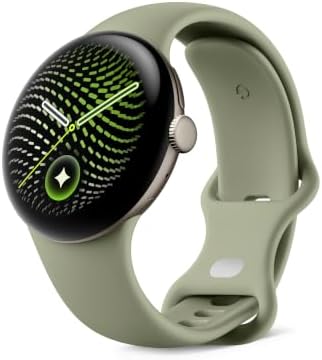
The most immediately felt difference is geometry. The Pixel Watch 5 uses a 41mm circular case with domed glass that catches reflections and reads almost like a traditional dress watch from a metre away. Apple’s rectangular case in 42mm or 46mm maximises text density per square millimetre, which matters for reading notifications, mapping a route, or glancing at a training metric mid-set.
There is a functional consequence beyond taste. Rectangular panels fit more characters per line, so watchOS can present longer messages and richer complications without truncation. A circular display forces tighter text wrapping and favours single-metric readability. Buyers who handle dense information on the wrist will notice this within a day; buyers who want a timepiece that happens to track health will keep returning to the Pixel silhouette.
Health Features Beyond the Pulse Sensor
Sleep staging, readiness scoring, and temperature trends have become the real battleground. Fitbit’s readiness score, carried into the Pixel Watch 5, combines heart rate variability, resting heart rate, and sleep quality into one daily number with plain-language explanations. Apple counters with sleep stages, wrist temperature deviations, and training load tracking that ties into broader cardio fitness metrics.
The divergence matters for specific buyers. Someone training for a first half marathon benefits from training load and route mapping, which is where Apple’s app ecosystem depth shows up. Someone managing stress and irregular sleep benefits from a readiness framework that translates raw biometrics into a single actionable recommendation, which is Fitbit’s historic strength. Neither approach is objectively superior, but they answer different questions.
- Sleep depth: both stage light, deep, and REM with comparable granularity
- Recovery scoring: Fitbit readiness is more conversational; Apple relies on trend comparison
- Menstrual and temperature: both log retrospective cycles, with Apple emphasising overnight temperature shift
- Assistant layer: Gemini on Pixel Watch 5 answers natural-language health queries; Siri remains narrower
On sensor depth, each platform now sells a flagship that competes directly. Apple Watch Series 12 GPS 46mm Black Aluminium represents the current Apple reference for a large-case, GPS-only configuration, while Google Pixel Watch 5 (41 mm) 41mm Wi-Fi covers the Pixel side in its entry connectivity tier.
Ecosystem Lock-In and the Two-Year Decision
Neither watch is a neutral accessory. Pairing a Pixel Watch 5 to an iPhone strips away much of its functionality, and pairing an Apple Watch Series 12 to an Android phone is not a supported configuration at all. This makes the phone in an owner’s pocket the single most predictive variable in the purchase, and it is worth stating plainly: the smarter watch on paper is the wrong watch on the wrong platform.
Within the correct ecosystem, continuity deepens over time. Apple’s handoff between watch, phone, and Mac is the strongest argument for Series 12 among users already invested in that stack, and Series 12 case sizes and connectivity tiers give a clear view of the options available before committing.
Who Should Buy Which
Buy the Apple Watch Series 12 if an iPhone is already in daily use, if sensor validation through Apple’s published accuracy study matters for reassurance, and if training load, route mapping, and dense on-wrist information are priorities. Buy the Google Pixel Watch 5 if an Android phone is the anchor device, if a circular case and domed glass suit personal style, and if a readiness-driven health narrative is more useful than a metrics spreadsheet.
There is a third buyer worth naming: the person replacing a device after three or four years. For that group, service network reach and resale value carry real weight, and both favour Apple. Conversely, anyone who has built a decade of Fitbit history and sleep data has a legitimate reason to stay within the Google fold rather than starting that record over.
The Verdict That Survives the Hype Cycle
What separates these two watches most cleanly is not a sensor count or a battery figure but the question each one is designed to answer. Apple built a device that compresses a training dashboard and a safety beacon onto a rectangular wrist screen. Google built a watch that looks like a watch and speaks about health in plain language. Neither ambition is less serious, and neither is free of trade-offs.
The most durable way to decide is to start from the phone, then move to the wrist. Buyers who begin with the phone almost never regret the choice; buyers who begin with a spec sheet often do. Held to that standard, both the Pixel Watch 5 and the Apple Watch Series 12 justify their place, and the right one is simply the one whose compromises a buyer already accepts.