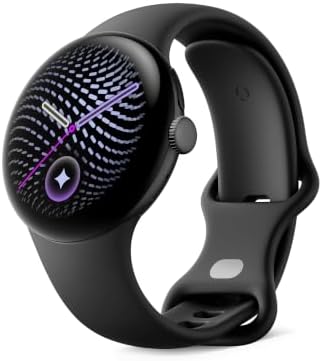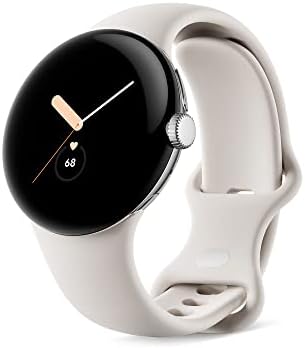
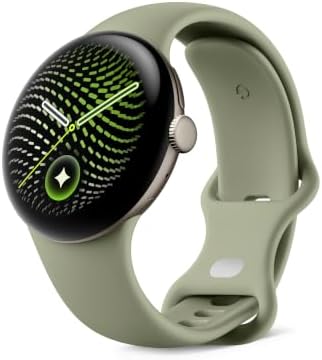
The modern smartwatch market splits into two clear philosophies. The Google Pixel Watch 5 series leans toward urban integration, pairing a domed glass design with the Gemini assistant and Wear OS. The Garmin Fenix 8 collection targets a different owner entirely: the hiker, diver, and multi-day racer who needs satellite navigation and a battery measured in weeks rather than hours. This guide is built as a permanent reference for that decision, mapping the specifications and trade-offs that actually change which watch belongs on your wrist.
| Feature & Selling Point | Google Pixel Watch 5 | Garmin Fenix 8 |
|---|---|---|
| Display and Lens | Domed AMOLED, 3D Corning Gorilla Glass | 1.4 inch AMOLED, sapphire lens |
| Battery in Smartwatch Mode | Up to 24 hours | Up to 16 days |
| Case Size and Weight | 41mm, lightweight aluminum | 47mm, fiber-reinforced polymer |
| Satellite Navigation | GPS, GLONASS, Galileo, BeiDou | Multi-band GNSS with topo maps |
| Water Resistance Rating | 5 ATM, swim-proof | 10 ATM, dive-rated |
| Health Sensor Suite | Heart rate, SpO2, ECG, skin temperature | Heart rate, SpO2, ECG, skin temperature |
| Built-in Flashlight | No | Yes, LED |
| On-Device Assistant | Google Gemini | Phone assistant relay only |
| Safety and Tracking | Fall detection, Emergency SOS | Incident detection, LiveTrack |
| Contactless Payments | Google Wallet | Garmin Pay |
| Training Analytics | Fitbit daily readiness and activity scores | Training load, recovery, VO2 max, Hill Score |
| Music and Offline Storage | 32GB onboard | Up to 32GB onboard |
| Phone-Free Calling | Yes, on cellular models | Yes, speaker and microphone built in |
| Charging Cadence | Nightly recharge routine | Weekly or longer between charges |
Two rows in that table do most of the deciding. Battery life separates the pair by a factor of roughly sixteen, which changes whether the watch can accompany a multi-day trek at all. Water resistance tells a similar story: 10 ATM on the Fenix 8 opens diving and high-speed water sports, while 5 ATM on the Pixel Watch 5 covers swimming and showers but stops there. Everything else on the list is a preference; those two are hard limits.
Design Language and All-Day Comfort
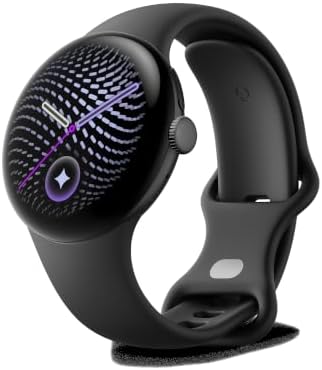
The Pixel Watch 5 follows a jewelry-first brief. Its domed glass curves into a recycled aluminum case, and the 41mm footprint keeps the profile close to the wrist. That matters more than it sounds: a watch light enough to forget is a watch people actually wear overnight, and overnight wear is when sleep and skin-temperature data become usable. The design borrows the visual grammar of a dress watch rather than a sports instrument, which is why it slides under a shirt cuff without complaint.
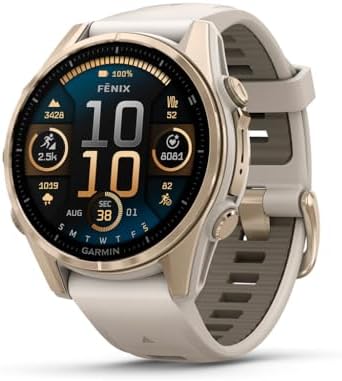
The Fenix 8 takes the opposite approach. A 47mm case built from fiber-reinforced polymer with a metal bezel is engineered for impact and thermal shock, and the sapphire lens resists scratching against rock and rope. The trade-off is mass. This is a watch you feel on the wrist, and that awareness is deliberate: the same bulk houses the antenna array, the larger battery, and the LED flashlight that turns the case into a usable tool after dark.
Software, Assistant, and Ecosystem Fit
Wear OS on the Pixel Watch 5 is where the Gemini integration earns its place. The assistant handles contextual requests, summarizes messages, and ties navigation and reminders back to an Android phone. For anyone already living inside that ecosystem, the watch behaves like an extension of the handset rather than a separate device with its own learning curve. Google’s software strategy is clearly built around that continuity, and it shows in how quickly notifications, payments, and smart home controls resolve on the wrist.
Garmin takes a sport-first route. The software centers on Garmin Connect, where training load, recovery time, and VO2 max live alongside route planning and topographic maps. Smart notifications arrive, but they are secondary to the training and navigation stack. The Fenix 8 also carries a speaker and microphone for phone-free calls, a feature aimed at remote settings where reaching for a handset is impractical. Neither approach is better in the abstract; they simply serve different daily routines.
Health Monitoring and Safety Features
Both watches cover the core sensor set: heart rate, blood oxygen, ECG, and skin temperature. The difference is in how the data is framed. Fitbit’s scores on the Pixel Watch 5 translate readings into daily readiness and activity guidance, which suits users who want a clear signal rather than a raw dataset. Fall detection and Emergency SOS round out the safety package, tuned for urban scenarios where a fall on pavement or a medical event at a desk is the realistic risk.
The Fenix 8 pushes further into athletic territory. Hill Score and Endurance Score quantify performance trends, and incident detection with LiveTrack lets contacts follow a route in real time during a ride or run. The Fenix 8 series also carries dedicated profiles for team sports and water sports, backed by that 10 ATM rating. For structured training, the depth of metrics is the point; for general wellness, it can be more data than most people will use.
Battery Endurance and Charging Reality
The Pixel Watch 5 runs about a day per charge, which means a nightly routine much like a phone. That is a real constraint for travel and camping, but it is also the price of a bright AMOLED panel in a thin case. Users who charge at a desk or bedside will rarely notice; users who spend weekends off-grid will notice immediately.
The Fenix 8 answers that with up to 16 days in smartwatch mode, and select models add solar charging to stretch it further. The practical effect is that charging becomes a weekly habit instead of a daily one, and multi-day events no longer require a power bank in the pack. For expedition use, that autonomy is not a luxury; it is the feature that makes the rest of the toolset usable.
Making the Choice Between Two Excellent Watches
The decision maps cleanly onto how the watch will be worn. The Google Pixel Watch 5 (41 mm) Wi-Fi suits the connected professional and Android loyalist who wants style, Gemini assistance, and reliable daily health tracking in a case that disappears under a sleeve. It is a companion device first and a fitness tracker second, and it is very good at that job.
The Garmin fēnix 8 47mm Multisport GPS Slate Gray rewards the adventurer, endurance athlete, and diver who needs multi-band navigation, dive-rated sealing, and a battery that outlasts the trip. It is a tool first and a smartwatch second, and no competing design matches its combination of autonomy and environmental tolerance. Choosing between them is less about which is superior and more about which set of constraints defines your week.
Both watches sit at the top of their respective categories, and both will serve their owners well for years. The useful question is not which one wins on paper, but which one you would still be glad to strap on after the novelty fades and the routine sets in. Answer that honestly, and the Garmin watches or the Pixel’s polished ecosystem will make the choice obvious.