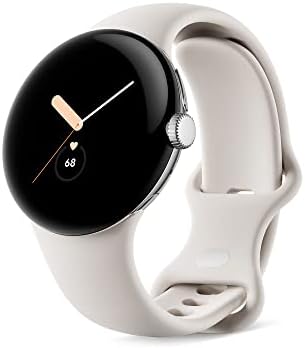
The Google Pixel Watch 5 series and the Samsung Galaxy Watch9 collection are the two reference points for Android smartwatch buyers in 2025, and this comparison is written as a permanent buying guide rather than a quick spec recap. Both run Google’s Wear OS platform, both target the same health-conscious audience, and both lean on fitness coaching and sleep analysis as headline selling points. The differences that actually decide a purchase run deeper: battery architecture, case sizing, display geometry, sensor depth and long-term software support all diverge between the Google brand’s design priorities and the Samsung brand’s engineering choices, so the right choice hinges on which trade-offs match your wrist and routine.
| Decision Criterion | Google Pixel Watch 5 | Samsung Galaxy Watch9 |
|---|---|---|
| Case sizes available | 41mm single size (per listing) | 40mm and 44mm options |
| Display treatment | Domed glass profile | Flat cushion-style face |
| Battery capacity | Not confirmed in verified sources | 390mAh on 40mm (20\% up on Watch8) |
| Cellular option | Wi-Fi and cellular variants | LTE available on listed models |
| Processor platform | Google silicon, Wear OS native | Snapdragon Wear Elite (per listing) |
| Health coaching | Comprehensive fitness and health tracking | Sleep and health coaching, heart management |
| AI assistant | Gemini integration | Galaxy AI feature set |
| Build materials | Recycled aluminium case | Armor Aluminium, Stainless Steel, Titanium (range) |
| Water resistance | 5 ATM swim-proof | 5 ATM / IP68 (Armor Aluminium) |
| Durability certification | Standard smartwatch rating | 10 ATM / IP69K on Titanium variants |
| Software support | Multi-year Wear OS updates | Multi-year One UI Watch updates |
| Ecosystem fit | Clean Wear OS, Pixel phone synergy | Galaxy phone and Samsung Health synergy |
| Fit and wearability priority | Compact, unisex domed profile | Larger wrist presence, two-size choice |
| Best suited to | Smaller wrists and Gemini users | Galaxy owners pushing hard training |
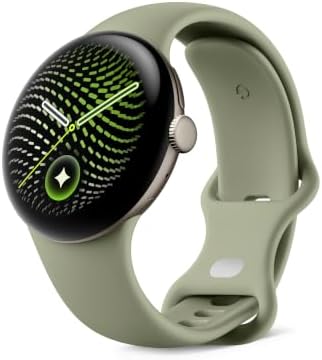
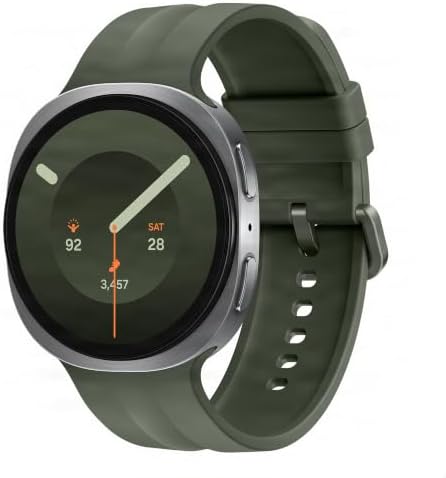
The clearest split in that table is battery headroom against body size. Samsung’s published figure of a 390mAh cell on the 40mm Galaxy Watch9 is a 20\% increase over the equivalent Watch8 and a 30\% increase over the Watch7, a measurable generational gain rather than a marketing claim. The Pixel Watch 5 counters with a single 41mm case and a domed display that keeps the footprint small, which matters more than raw capacity for anyone with a narrow wrist. Samsung also offers titanium variants rated to 10 ATM and IP69K, while its Armor Aluminium versions stay at 5 ATM and IP68, so the durability tier you get depends on the finish you choose.
Battery Architecture and the Daily Charging Equation
Samsung’s incremental battery story is easy to verify from official material: the 40mm Galaxy Watch9 carries a 390mAh pack, roughly a fifth more capacity than the Watch8 generation and close to a third more than the Watch7. In practice that gap converts into spare hours for continuous heart-rate sampling, always-on display time and overnight sleep staging, which is the workload most buyers actually run. Larger cells do not automatically produce longer runtime, because processor efficiency and display power draw move in step, but a documented capacity increase gives the Watch9 a defensible margin on paper.
Google’s approach optimises the opposite variable. A single 41mm case with a domed crystal isolates the battery budget across one chassis, so optimisation work need not be replicated across sizes, and the curved glass gives the wearable a lighter visual mass than its diameter suggests. The result suits people who charge during a morning shower and never think about power again. Choosing between the two therefore comes down to whether you want headroom for multi-day wear or a device tuned to a compact form factor.
Design Language, Case Geometry and Materials
The Galaxy Watch9 uses a cushion-shaped body, and Samsung’s own durability table distinguishes three material tiers: Titanium at 10 ATM and IP69K, Armor Aluminium at 5 ATM and IP68, and Stainless Steel at 5 ATM and IP68. That hierarchy is worth understanding before purchase, because two watches in the same product line can carry meaningfully different resistance ratings depending on the case finish. The 44mm version, as listed in the Samsung Galaxy Watch9 AI 44mm, shows how the larger chassis pairs the cushion silhouette with LTE connectivity and a silver finish.
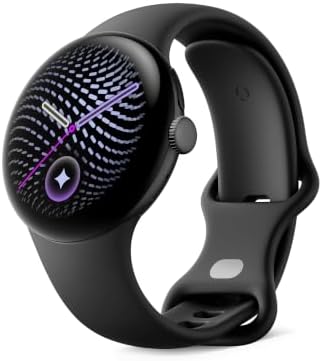
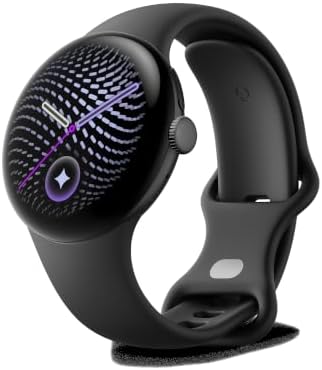
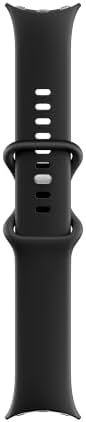
Google keeps the Pixel Watch 5 to a single 41mm diameter and relies on the domed glass as its signature design cue. The listing for the Google Pixel Watch 5 (41 mm) pairs a pyrite case with an olive band, an earthy combination that reads as lifestyle-first rather than gym-first. The dome protects the display edge and softens reflections at oblique angles, a practical benefit that also gives the watch a rounded, jewellery-like profile.
Health Tracking Depth and Coaching Models
Both manufacturers describe sleep insights, fitness coaching and heart monitoring in their own official material, and both use the same underlying Wear OS foundation, so the sensor set is closer than brand marketing suggests. Samsung frames the Watch9 around sleep and health coaching plus heart management, while Google positions the Pixel Watch 5 around comprehensive health and fitness tracking. The practical difference sits in how that data surfaces and which companion app you live inside.
Samsung’s Coaching Framework
Samsung Health treats the watch as a node in a broader coaching loop, drawing on phone-side analysis and feeding structured guidance back to the wrist. Users who already log meals, workouts and sleep in Samsung’s app avoid the friction of syncing between platforms, and heart management features are presented as part of the same dashboard rather than separate plugins.
Google’s Gemini Advantage
The Pixel Watch 5 leans on Gemini for natural-language queries about health data, letting owners ask questions conversationally instead of drilling through menus. For anyone already dependent on Google’s assistant across phone and home devices, that continuity removes a layer of switching. The trade-off is that deep, structured coaching workflows feel more mature on Samsung’s side, while Google’s strength is contextual convenience.
Ecosystem Lock-In and the Phone You Already Own
This is the criterion that overrides most spec differences. Samsung’s smartwatches deliver their fullest feature set with a Galaxy phone, and Samsung’s own compatibility documentation notes that functionality depends on the paired phone’s operating system. Galaxy owners gain tighter handoff for calls, notifications and health data, and the Watch9 sits naturally beside the rest of the Samsung Galaxy Watch9 collection and the wider Samsung wearable family. Pixel phone owners get the mirror-image benefit from Google’s tighter integration, with Gemini and Pixel services behaving predictably across devices. Matching the watch to your phone is not a marketing suggestion but a genuine functional decision.
Who Should Buy Which
Buyers with smaller wrists who want a compact, rounded watch and use Gemini daily should pick the Pixel Watch 5. Its single 41mm case and domed crystal keep the profile slim, and the assistant layer rewards anyone embedded in Google’s services. The pyrite and olive pairing also reads as a fashion piece first, fitness tool second, which suits office and weekend wear equally.
Buyers already inside the Galaxy ecosystem, or anyone who trains seriously and wants documented battery headroom, should pick the Galaxy Watch9. The 390mAh cell on the 40mm model is a measurable step up from its predecessors, the two-size range lets larger wrists find a fit, and titanium variants reach 10 ATM with IP69K certification for genuinely rugged use. The 44mm LTE configuration suits people who leave the phone behind on runs and want calls on the wrist.
The Verdict Criteria That Survive the Spec Sheet
Three questions decide this comparison long before a spec table does. First, what size is your wrist and how much visual presence do you want. Second, which phone lives in your pocket today. Third, do you value documented battery capacity or a compact single-size design more. Answer those honestly and the choice becomes obvious, because both watches are competent Wear OS devices with competent health tracking. The Pixel Watch 5 wins on compactness and assistant fluency, the Galaxy Watch9 wins on battery figures, size options and rugged titanium variants. Neither is a universal upgrade, and the buyer who matches the wearable to an existing routine, rather than to a feature list, ends up wearing it every day.