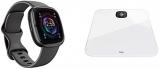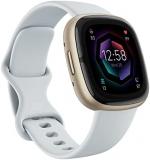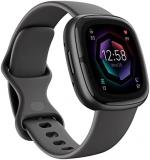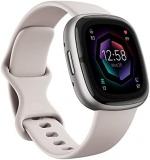
The Fitbit Sense 2’s integration of Google Maps directly onto its vibrant AMOLED display marks a significant evolution for health-centric wearables, bridging the gap between physiological awareness and real-world navigation. This feature transforms the device from a passive health monitor into an active urban companion, providing turn-by-turn directions that keep users focused on their surroundings rather than their phones. For those seeking a comprehensive wellness tracker, the the Fitbit Sense 2 stands as a prime example of advanced health-focused wearables.
This navigation capability is powered by the device’s built-in GPS, which independently tracks location without tethering to a smartphone. When a route is initiated from a paired phone, haptic vibrations on the wrist gently signal upcoming turns, while clear, glanceable icons and distance markers appear on the watch face. This hands-free guidance is invaluable for runners exploring new cities, cyclists navigating bike lanes, or travelers simply trying to find a cafe without constantly unlocking their phone, thereby reducing digital distraction and potential stress.
The utility of Google Maps is deeply synergistic with the Sense 2’s core health philosophy, particularly its advanced stress management tools. The device’s continuous EDA (Electrodermal Activity) sensor and cEDA (continuous EDA) algorithm detect potential stress responses. Navigating an unfamiliar, crowded area can be a trigger; receiving directions directly on the wrist minimizes the need to interact with a potentially overwhelming phone screen, allowing the user to stay present. The watch can then prompt for a guided breathing session via the Relax app if it detects elevated stress levels during the journey, creating a holistic feedback loop between external navigation and internal calm.
Beyond navigation, the Sense 2 reaffirms its position as a premier health guardian. Its multi-path optical heart rate sensor and new Body Response sensor work in tandem to track heart rate variability, skin temperature variation, and sleep stages with impressive detail. The brand’s ecosystem, including the Fitbit Charge 6 for daily fitness, offers a range of options for different activity levels and styles, but the Sense 2 distinguishes itself with this depth of health metrics and on-wrist ECG for atrial fibrillation assessment.
Design and battery life are crucial for a device meant to be worn 24/7. The Sense 2 offers a sleek, lightweight aluminum case that is comfortable for all-day wear and sleep tracking. The always-on display option ensures time and notifications are always visible, though activating it alongside frequent GPS use for navigation will understandably reduce the robust six-plus day battery life. For most users, charging every few days while showering remains a seamless routine, ensuring the watch is always ready to guide and monitor.
The inclusion of Google Maps is part of a broader shift towards greater third-party app functionality and connectivity within the Fitbit experience. While the app gallery is more curated than some competitors, it focuses on quality and utility, with staples like Spotify for music control and the upcoming Google Wallet for contactless payments. This selective approach ensures reliability and a smooth user experience, prioritizing core health and navigation functions over an overwhelming array of rarely-used apps.
Exploring the top Fitbit selection reveals a clear focus on actionable health insights and user-friendly design across all models. The Sense 2 sits at the apex, not merely by adding features, but by thoughtfully integrating them into a cohesive lifestyle tool. Its value proposition lies in making advanced health data accessible and pairing it with practical daily utilities like reliable navigation, thereby supporting both physical well-being and everyday efficiency.
Ultimately, the Fitbit Sense 2 with Google Maps represents a mature vision for the smartwatch: an unobtrusive, elegant device that empowers users to understand their bodies while confidently navigating their world. It demonstrates that the most impactful technology doesn’t demand constant attention but quietly enhances capability and awareness, fostering a sense of control and readiness for whatever path lies ahead.