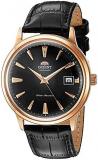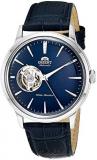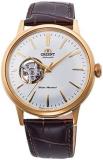
A chronograph wristwatch serves as both a precision instrument and a display of mechanical craftsmanship, offering functionality that extends beyond simple timekeeping. Within the accessible segment of horology, the dedication to in-house manufacturing found in the Orient brand creates a compelling proposition for enthusiasts who value engineering integrity without excessive cost. This exploration focuses on the Orient chronograph watch, examining how Japanese manufacturing principles blend with traditional complications to deliver a uniquely capable instrument.
Orient has long distinguished itself through vertical integration, producing movements entirely within its own facilities rather than sourcing from third-party suppliers. This control over the entire production chain results in remarkable consistency and value, particularly visible in its chronograph line where mechanical complexity demands exacting tolerances. For those interested in exploring the full range of available timepieces, the complete Orient brand selection presents a comprehensive catalog of models.
In-House Mechanical Chronograph Movements
The defining characteristic of an Orient chronograph watch is its proprietary caliber. Rather than relying on modular chronograph mechanisms or generic Swiss 茅bauches, Orient engineers developed dedicated movement architectures that integrate the stopwatch function directly into the base plate. This approach reduces overall thickness while improving reliability-a significant achievement in mechanical watchmaking.
These movements typically operate at a frequency of 21,600 vibrations per hour, providing smooth sweep seconds and precise 1/5-second timing increments. The cam-actuated chronograph mechanism, while less intricate than column-wheel systems found in high-end Swiss calibers, offers robust performance and easier serviceability. Power reserves commonly hover around 40 hours, sufficient for daily wear with weekend layovers.
The automatic winding system employs a bidirectional rotor, efficiently converting wrist motion into mainspring energy. This practical engineering choice ensures the watch remains powered during regular daily activities without requiring manual winding-though crown winding remains available for initial setup or after extended periods of inactivity.
Understanding Cam-Actuated vs. Column-Wheel Chronographs
Many affordable mechanical chronographs utilize a cam-actuated system, a design choice that affects both tactile feedback and long-term maintenance. Orient implements this system with precision-ground components that provide crisp activation of the start, stop, and reset functions. The pusher feel, while firmer than high-end alternatives, delivers satisfying tactile confirmation that the mechanism has engaged correctly.
Column-wheel chronographs represent the more traditional approach, offering smoother pusher operation and greater durability under frequent use. However, cam systems offer distinct advantages in affordability and service simplicity-fewer components translate to reduced manufacturing costs and easier repairs when adjustment becomes necessary after years of use.
An additional consideration involves the vertical clutch versus horizontal coupling debate. Orient chronographs typically employ horizontal coupling, where the chronograph seconds wheel engages directly with the running train. This design, while perfectly functional, may introduce slight stutter in the chronograph hand upon activation as gear teeth engage. Vertical clutches eliminate this phenomenon through friction-based engagement but increase production complexity and cost.
Design Language and Dial Architecture
Orient chronograph watches typically adopt a three-register layout, with subdials occupying the 6, 9, and 12 o’clock positions. This configuration provides immediate visual familiarity while accommodating the seconds subdial at 6, minute totalizer at 9, and hour totalizer at 12. The resulting symmetry creates a balanced dial composition reminiscent of mid-twentieth century chronograph traditions.
Applied indices, beveled hour markers, and dauphine hands characterize the design language, reflecting Orient’s commitment to legibility and premium aesthetics. Many models incorporate a date window at 4:30-a practical compromise that maintains dial symmetry while providing useful calendar functionality. The cyclops magnifier over the date aperture, borrowed from Rolex’s iconic design, appears on select references to enhance readability.
Case diameters range from 40mm to 44mm, accommodating contemporary tastes while preserving vintage proportions. Stainless steel cases feature a combination of brushed and polished surfaces, creating visual interest through light reflection rather than reliance on precious materials. Screw-down casebacks, often with exhibition windows displaying the decorated movement, provide water resistance typically rated at 50 to 100 meters.
The bezel presentation varies across the collection, with tachymeter scales on sportier references and smooth polished bezels on dressier iterations. This stylistic flexibility allows the wearer to select a chronograph that aligns with personal preferences-whether the tool-watch aesthetic demands a functional bezel or a formal occasion calls for understated elegance.
Crystal Selection and Durability
Sapphire crystal graces higher-tier Orient chronographs, offering exceptional scratch resistance through synthetic corundum construction. This mineral-the hardest naturally occurring substance after diamond-requires diamond-tipped cutting tools for shaping, contributing to increased production costs but delivering long-term transparency preservation.
Mineral crystal appears on more accessible models, providing adequate impact resistance at reduced expense. While more susceptible to scratching than sapphire, mineral glass can be polished to remove superficial marks-a maintenance advantage unavailable to sapphire owners. Anti-reflective coating on either surface reduces glare, enhancing legibility in bright outdoor conditions.
Comparing Orient Chronographs Across Price Tiers
| Feature & Selling Point | Entry-Level Orient Chronograph | Premium Orient Chronograph |
|---|---|---|
| Movement | Automatic Caliber | Automatic Caliber with Hand-Winding |
| Crystal | Mineral | Sapphire Crystal |
| Water Resistance | 50 Meters | 100 Meters |
| Caseback | Solid Screw-Down | Exhibition Window |
| Key Selling Point | Exceptional entry-level value | Enhanced finishing and visibility |
This tiered approach allows buyers to prioritize features according to personal budget and use case, with the premium tier offering tangible upgrades in scratch resistance, water protection, and visual satisfaction through the exhibition caseback. The movement refinement in premium models often includes decorative perlage and Geneva stripes visible through the caseback crystal.
Practical Ownership Considerations
Wearing an automatic chronograph demands understanding of its mechanical nature. The pushers should not be actuated underwater, even on models rated for swimming, as water pressure can compromise the pusher seals. Similarly, resetting the chronograph while it is running places unnecessary stress on the mechanism-always stop before resetting to preserve gear health.
Orient chronographs generally accept standard 20mm or 22mm straps, offering extensive customization possibilities through NATO, leather, or mesh bracelet options. Quick-release spring bars on recent models simplify strap changes without specialized tools, encouraging rotation between leather for formal occasions and rubber for active pursuits.
The power reserve indicator-a signature Orient complication absent from many competing chronographs-provides practical utility by displaying remaining mainspring energy at a glance. This feature, typically positioned at 9 o’clock with a 0-40 scale, prevents unexpected stoppage by alerting the wearer when winding becomes advisable.
Regulation of the mechanical movement can correct minor timekeeping deviations through the adjustment of the balance wheel’s effective length. Many watchmakers recommend initial regulation after the first few months of ownership, as the mainspring settles into its operating pattern. Service intervals of five to seven years maintain optimal lubrication and timing precision.
The Orient Chronograph in the Broader Horological Landscape
Japanese watchmaking culture emphasizes accessible precision, and the Orient chronograph exemplifies this philosophy. While Swiss manufacturers often reserve mechanical chronographs for luxury price segments, Orient’s Japanese efficiency and vertical integration make this complication available to a wider audience without compromising fundamental quality.
The relationship between function and form in Orient chronograph design reveals a distinct industrial aesthetic. Rather than embellishing movements with unnecessary decoration, finishing serves functional purposes-beveled edges reduce friction against oils, perlage traps lubricant for sustained operation, and blued screws indicate temperature stabilization during production.
This engineering-first approach extends to the chronograph activation sequence, where cam geometry and spring tension are optimized for reliable operation across temperature variations. The pusher stroke length and resistance are calibrated to prevent accidental activation while remaining comfortable for intentional timing use-a balance that requires iterative refinement during development.
Collectors value Orient chronographs for their place in watchmaking history, representing a period when Japanese manufacturers demonstrated that mechanical chronographs could be produced at scale with excellent quality control. This democratization of a previously exclusive complication changed market expectations and forced broader industry reconsideration of pricing structures.
The Orient Chronograph Watch thus emerges as a testament to precision, providing reliable timing functionality through in-house automatic movements while maintaining aesthetic appeal that transcends passing trends. Its design harmonizes practical function with visual character, capturing the spirit of accurate mechanical timekeeping in everyday context.