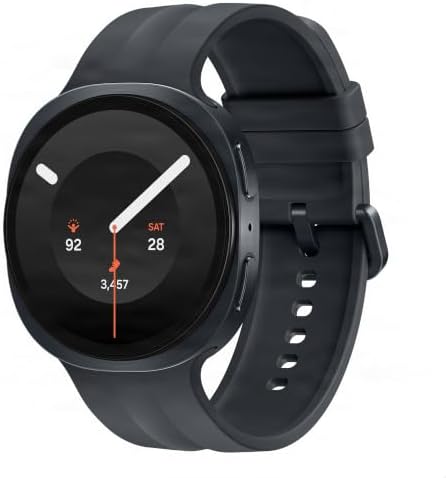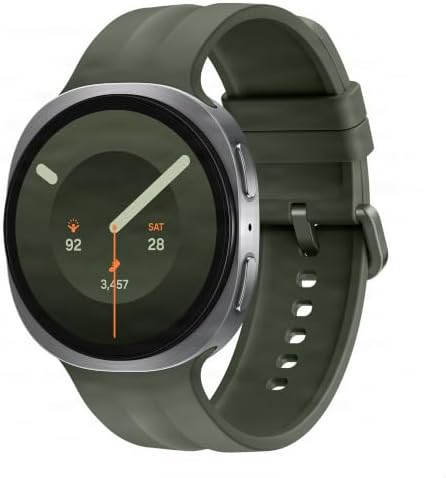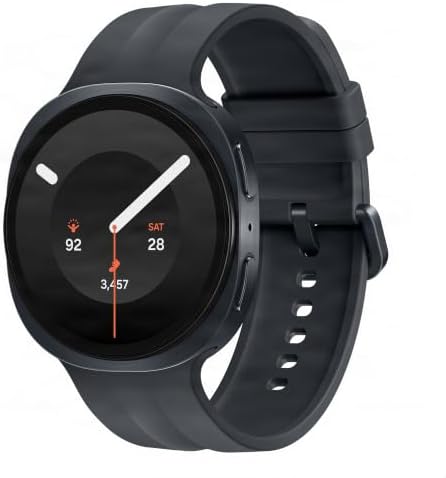
The Samsung Galaxy Watch9 and the Galaxy Watch8 Classic sit at two distinct points on the modern smartwatch spectrum, and choosing between them demands more than a glance at a spec sheet. One pushes a slimmer, lighter wearable philosophy built around all-day health monitoring; the other preserves the tactile rotating bezel and a more traditional watchmaking silhouette. This guide is written as a permanent reference for buyers weighing the two models, setting out the real trade-offs so the decision rests on how the watch will actually be worn.
| Feature & Selling Point | Galaxy Watch9 | Galaxy Watch8 Classic |
|---|---|---|
| Case Thickness | 8.6 mm | Thicker profile with bezel assembly |
| Weight (approx.) | 31.5 g (40 mm) / 34.0 g (44 mm) | Heavier due to bezel and 47 mm case |
| Display | Super AMOLED, ~34 / 37.3 mm | 1.5-inch Super AMOLED |
| Battery Capacity | 390 mAh | Tuned for larger case, endurance-focused |
| Navigation Control | Touch bezel / on-screen gestures | Physical rotating bezel plus Quick Button |
| Case Size Options | 40 mm and 44 mm | 47 mm |
| Lug System | Cushion design, integrated fit | Dynamic Lug System |
| Strap Width | Standard quick-release | 20 mm |
| Health Monitoring | All-day monitoring, sleep and heart coaching | Full health suite, wellness focus |
| Connectivity | Bluetooth and LTE variants | Bluetooth (hybrid band option) |
| Platform | Snapdragon Wear Elite platform | Wear OS with AI coaching |
| Best Suited To | Light daily wear and fitness tracking | Tactile control and classic styling |
| Warranty (UK) | 3-year manufacturer warranty | 3-year extended warranty |
| Key Differentiator | Slim 8.6 mm cushion case | Iconic rotating bezel |
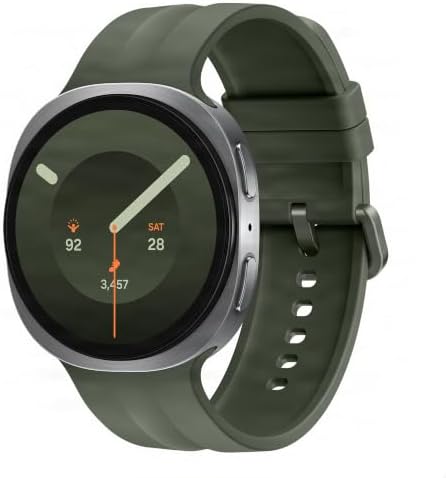

The table makes the central split clear: the Galaxy Watch9 wins on portability and battery-per-millimetre, while the Galaxy Watch8 Classic trades that slimness for a physical rotating bezel and a 47 mm presence that reads as a conventional watch. Nearly every other decision flows from those two facts. What follows unpacks each dimension so the right choice becomes obvious based on wrist size, control preference, and battery expectations.
A Tale of Two Wearable Philosophies
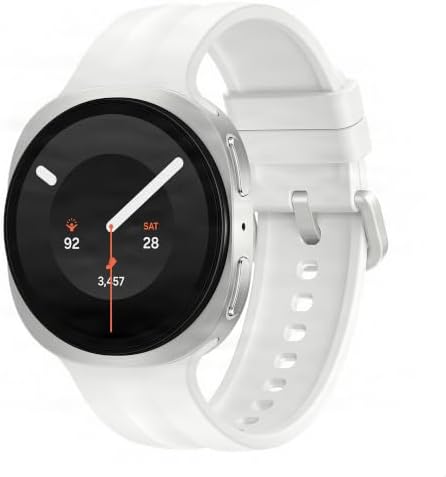
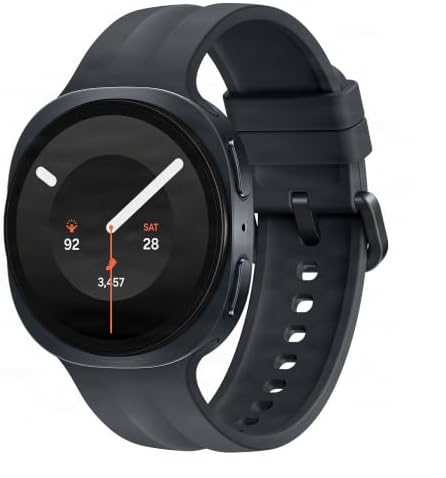
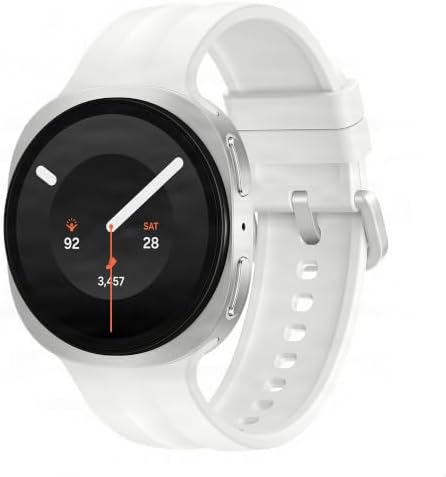
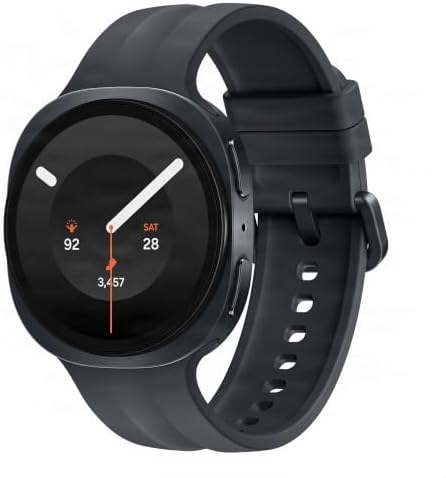
Samsung states that the Samsung Galaxy Watch9 AI 44mm Cushion Silver LTE is designed around a refined cushion profile measuring just 8.6 mm thick, a figure that keeps the case close to the wrist and reduces the chance of snagging on sleeves. Official specifications list weights of 31.5 g for the 40 mm model and 34.0 g for the 44 mm version, numbers that place it among the lightest full-featured smartwatches in its class. The philosophy is wearable-first: sensors and coaching features that monitor continuously without the wearer noticing the hardware.
The Galaxy Watch8 Classic takes the opposite route. Samsung positions it around the return of the iconic rotating bezel and an all-new Quick Button, adding tactile interaction on top of touch. The case measures 47 mm and carries a 1.5-inch Super AMOLED display, and the Dynamic Lug System lets the band angle downward so the larger case sits more naturally on the wrist. Buyers drawn to that machined bezel will find the Galaxy Watch8 Classic collection aimed squarely at anyone who wants a smartwatch that looks and feels like a traditional timepiece.
Design, Build, and Wrist Presence
Case size is the first practical filter, and here the two watches barely overlap. The Watch9, sold across Samsung’s Galaxy Watch9 models, gives wrists a choice between 40 mm and 44 mm, which makes it viable for smaller wrists and for anyone who dislikes a large object on the arm. The 8.6 mm thickness reinforces that sensation; under a dress shirt cuff, it slips beneath fabric where thicker cases catch and drag.
The Watch8 Classic is a 47 mm proposition, with no smaller alternative in its line. Samsung’s Dynamic Lug System helps by curving the strap down sharply at the lugs, but 47 mm remains a substantial case diameter, and buyers with wrists below roughly 17 cm should visualize the fit before committing. On the plus side, that extra canvas stretches across a 1.5-inch display, and the physical bezel adds a layer of genuine material and precision machining that touch-only watches cannot replicate.
The strap arrangements differ too. The Watch8 Classic uses 20 mm bands and is supplied in configurations such as the Samsung Galaxy Watch8 Classic 46mm AI Black Bluetooth, whose hybrid band pairs leather-style surfacing with a sport-ready underside for a dressier finish. The Watch9 follows a simpler quick-release pattern, and this affects the tactile experience of landing on one of them after days of use.
Battery, Endurance, and Charging Expectations
The Galaxy Watch9 carries a 390 mAh battery, a capacity that Samsung pairs with the claim of all-day health monitoring. Combined with the slim case, that figure reflects efficiency tuning rather than raw capacity; a lighter watch uses less energy in motion sensing and has less screen area to illuminate. For most wearers that means dependable full-day coverage with a nightly charge, and the smaller case size saves weight on the wrist all day.
The Watch8 Classic anchors its endurance to its larger 47 mm enclosure, where the internal volume permits a larger cell than a 40 mm chassis would. Samsung does not publish a single headline figure that applies across all use cases, so buyers should judge endurance relative to their settings. The lesson is that neither watch is a multi-day marathon runner in the style of a rugged adventure watch; both are designed for daily charging, and this makes the reach of a running watch a separate category entirely.
Tactile Control: Rotating Bezel vs Touch-First Interface
This is the decision most buyers will not foresee until they live with the watch. The Galaxy Watch9 controls navigation through a touch bezel and on-screen gestures, and with a slim bezel border the interaction is fluid once learned. Over weeks it becomes so natural that the difference is forgotten, yet this means reaching across a smaller body to swipe, with no moving part to grip and no mechanical feedback.
The Watch8 Classic restores physical interaction. A rotating bezel clicks through menus, notification stacks, and watch faces with defined detents, and it works reliably with wet or gloved fingers. With a physical bezel plus the new Quick Button, the Classic answers the needs of divers, kitchen-based cooks, cold-climate cyclists, and anyone who finds swiping on a small screen imprecise. But those benefits come with extra parts and a heavier case, so buyers concerned about long-term simplicity may lean toward the cleaner implementation.
Health Monitoring, Coaching, and Platform
Samsung’s positioning for the Watch9 centres on all-day health monitoring and AI-supported sleep and heart coaching, and the internal platform is named as Snapdragon Wear Elite. Buyers should read official documentation carefully to confirm specific sensor arrangements for their region, because Samsung does not list identical feature sets across all markets. The underlying proposition, though, is a sensor array that runs continuously and quietly, surfacing trends rather than demanding attention.
The Watch8 Classic brings the health side of the family together with the same broader AI coaching stack, prioritizing continuous glucose support and wellness trends for everyday users rather than a rigid performance focus. That positions the Watch8 Classic as a wellness watch with tactile class, and the Watch9 as a wellness watch with a lighter feel.
A fair reading across the Samsung brand’s wider catalogue shows these steps reflecting progress over the earlier models. Buyers upgrading from within the family who already use a rotating bezel model will feel the Classic line as a tactile evolution, while those moving up from a smaller model will find the Watch9 much more livable on wrists that cannot carry 47 mm with comfort.
Warranty, Longevity, and Purchase Considerations
Both models are offered in the UK with a 3-year warranty, a meaningful assurance for a device carrying batteries, motors, and software updates beyond the typical 12-month period. The Watch8 Classic uses authentic mechanical hardware, and a rotating bezel is one of the more durable interaction mechanisms a smartwatch can offer because it avoids repeated swiping on a touch layer. The trade-off is a greater number of moving components over a long service life.
The Watch8 Classic is available through the branded bundles and savings offers Samsung runs periodically in the UK, though those promotions vary by month and should not be used as a long-term price guarantee. What matters is that the amount budgeted toward the device stands independent of either tier.
Who Should Buy Which: A Practical Decision Framework
Buy the Galaxy Watch9 if the wrist is on the smaller side, if 47 mm feels excessive, and if a slim, light watch fits the intention of wearing a device that all but disappears. It also suits anyone who prefers a modern touch interface or an elevated fitness step tracker experience and wants the battery to support continuous monitoring across the day. Emphasized points are portability, an 8.6 mm profile, and two physical sizes that accommodate slightly narrower wrists. It naturally suits runners, office wearers, and first-time smartwatch buyers.
Buy the Galaxy Watch8 Classic if tactile operation is essential, if gloves or wet hands are part of daily life, or if the wristwear is expected to read as a traditional watch with a machined bezel on a larger forearm. The price is size, weight, and the absence of a smaller case, and it is the correct compromise for people who want a smartwatch that behaves like a timepiece. This is the model for divers, technicians, winter commuters, and buyers who reject touch-first interfaces.
Those who want a formal look without losing the light feel can still wear the Watch9 with a dress strap, and the choice then rests on bezel preference alone. Buyers approaching the ecosystem for the first time should set aside time with both styles on the wrist as the interaction pattern rightly becomes the final filter.
Either model represents a mature expression of the current Galaxy Watch generation: one streamlines the wearable into a light daily companion, and the other gives digital tools the tactile soul of an analog object. The right choice is the one that matches wrist size, interaction preference, and a realistic view of battery habits, because a versatile smartwatch is measured less by specs on a page and more by how seldom it distracts from life.