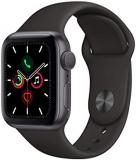
When exploring the Fitbit Sense versus Apple Watch SE comparison, many users begin the process by considering the type of experience they want from a modern wearable. While both devices focus on convenience, notifications, and all-day tracking, their priorities differ significantly. Fitbit Sense is centered heavily on wellness metrics, stress monitoring, and emotional balance. The Apple Watch SE leans toward everyday connectivity, fast performance, and deep integration with the Apple ecosystem. Understanding these contrasts helps users decide which smartwatch aligns more closely with their lifestyle and expectations.
From the perspective of wellness monitoring, the Fitbit Sense demonstrates stronger specialization. The inclusion of EDA scans for stress detection sets it apart from devices like Fitbit Versa 3 or Fitbit Versa 4. This tool measures electrodermal activity to illustrate how the body responds to emotional strain. The Sense also offers ECG readings, skin temperature variation tracking, and detailed SpOâ‚‚ analysis. These features form a broad platform that users interested in mindfulness and body awareness appreciate. For many people who previously relied on Fitbit Inspire 2, Fitbit Sense 2, or Fitbit Charge 6, the transition to the Sense represents a deeper dive into health insights rather than merely counting steps or logging simple activities.
On the other hand, the Apple Watch SE introduces advantages oriented toward speed and interface efficiency. Its processor delivers quick app launches, smooth animations, and crisp responsiveness across menus. Integration with iPhone features, including Apple Maps navigation, call handling, and messaging, creates a unified technological environment. Although the SE does not include some advanced health sensors such as ECG or blood oxygen measurement, many users find its simplicity appealing. The device excels in delivering connectivity that fits naturally into fast-paced routines. For users who own Apple Smart Watches for men or Apple Smart Watches for women, switching between models often feels seamless.
An interesting comparison emerges when discussing design philosophies. The Fitbit Sense emphasizes softness and comfort through its rounded housing and gentle contours. Its stainless steel variant has a polished surface that attracts wearers looking for an elegant but subtle presence. Users who appreciate Fitbit Luxe or Fitbit Watch for women often find the Sense appealing for its premium look. On the opposite side, the Apple Watch SE carries the signature rectangular shape recognized globally. It aligns well with those who favor a clean digital aesthetic. Models such as the Apple Watch Series 10 GPS 46 mm Smartwatch and Apple Watch Ultra 2 GPS + Cellular 49mm Smartwatch share a visual lineage that emphasizes clarity and functional precision.
Battery life is another major point of divergence. The Fitbit Sense typically lasts several days on a single charge, allowing users to maintain constant sleep tracking without interruption. This aligns with those who previously used Fitbit Versa 2, Fitbit Inspire 3, or Fitbit Charge 5 and prefer long endurance over processing power. The Apple Watch SE, by contrast, typically requires daily charging. While some users adapt to this cycle easily, others may find the routine incompatible with continuous overnight sleep monitoring. People interested in features found on Apple Watch SE (2nd Gen) GPS 40mm Smartwatch Starlight Aluminium – S/M or Apple Watch Series 10 GPS 46 mm Smartwatch Black Aluminium may prioritize ecosystem integration over battery longevity.
Workout performance across the two devices shares similarities but with slight differences. Fitbit Sense leverages its excellent heart-rate accuracy and wellness dashboard to enhance running, cycling, or strength training. Devices such as Fitbit Sense 2 and Fitbit Charge 6 further strengthen the brand’s reputation for fitness-oriented tracking. Meanwhile, the Apple Watch SE offers superb GPS performance, reliable pace measurements, and intuitive workout controls. Apple’s Fitness app creates a visual and structured approach to progress tracking. Although users seeking deep biometric analysis may prefer Fitbit‘s approach, those who value rapid interaction and a polished activity interface may lean toward the SE.
Another consideration is how each smartwatch integrates into daily digital behavior. Fitbit Sense focuses heavily on wellness reminders, stress-reduction guidance, and health-driven notifications. In contrast, the Apple Watch SE feels like an extension of the iPhone, especially for users who rely on messaging, streaming, navigation, or app alerts. People who appreciate the Apple Watch SE (2nd Gen) GPS 40mm Smartwatch – S/M find that its seamless synchronization with iOS simplifies their routines. Those who value quiet focus and reduced notification clutter may gravitate toward the Fitbit Sense, which structures its interface around mindfulness rather than digital multitasking.
Sleep tracking reveals another gap between the two. Fitbit Sense provides deep sleep stage analysis, restlessness metrics, and temperature variations. It builds an extended understanding of the wearer’s nighttime rhythms. Comparatively, Apple Watch SE offers reliable sleep duration metrics but lacks advanced environmental sensors. Users upgrading from Fitbit Versa 4, Fitbit Inspire 3, or Fitbit Ace 3 often find Fitbit’s sleep analytics to be among the strongest benefits of staying within the Fitbit platform.
Even when comparing additional models such as Apple Watch Ultra 2 GPS + Cellular 49mm Smartwatch or Apple Watch Series 10 GPS 46 mm Smartwatch, the SE still focuses on delivering speed and convenience rather than exhaustive health tools. In contrast, Fitbit Sense continues prioritizing emotional well-being, physical health, and personal balance. Both devices serve powerful purposes, but they appeal to different types of users.
Ultimately, choosing between Fitbit Sense and Apple Watch SE depends on whether wellness depth or digital efficiency is more important. People who want a calm, guided approach to health routines may find Fitbit Sense more meaningful. Those who want fast performance, tight ecosystem integration, and sleek everyday usability may find the Apple Watch SE more practical. Both devices have earned strong reputations, and understanding their differences helps every user make a confident and satisfying choice.


![(Guess Watch) Guess Guess Watches Ladies Fame Women's Analog Display Quartz Table Same Stainless Steel Child GW0508L2 [Parallel Import], Bracelet Type](http://www.donysterling.co.uk/images/202501/thumb_img/78626_thumb_G_1737710286550.jpg)